The total US tariff rate on Chinese goods has climbed to 145%, as stated by the White House. In contrast, the European Union has decided to postpone implementing its retaliatory tariffs. Stay tuned with Farovint for further updates.
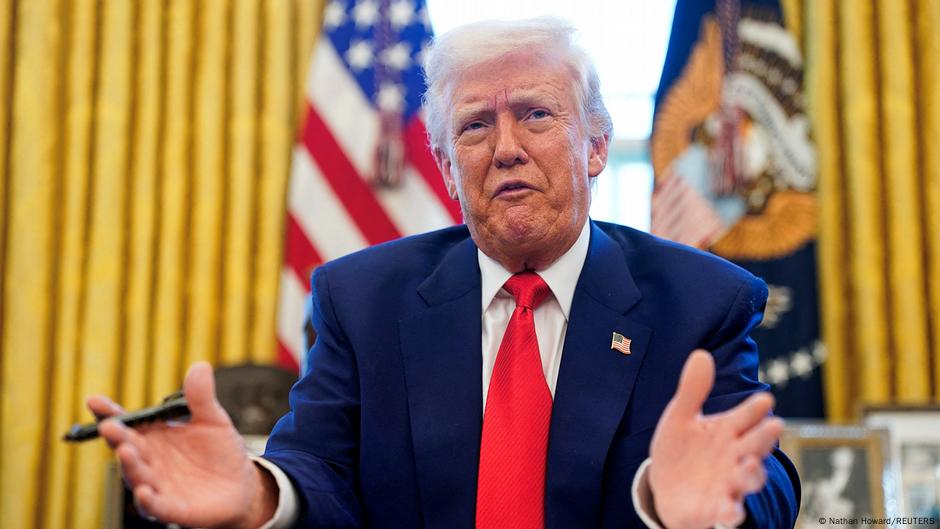
On Thursday, The White House stated that the total tariffs applied to most of the products coming into the United States from China amount to 145%.
This development follows President Donald Trump’s announcement that he would increase the rate to 125%. The White House stated that this new rate would be added to the current 20% tariff.
Prior to the announcement, China stated that it would "resist till the very end" if no agreement is made.
On Wednesday, Trump suddenly reversed course and declared a 90-day suspension of tariffs for every country excluding China, imposing a uniform 10% duty universally.
In reaction, the European Union stated on Thursday that it would suspend the retaliatory actions announced the previous day in response to U.S. tariffs imposed on European steel and aluminum products.
The European Union planned to impose counter-tariffs on approximately €21 billion ($23.25 billion) worth of American goods beginning the following Tuesday.
Here are the key developments resulting from the Trump tariffs on Thursday, April 10:
The White House has clarified that the U.S. is imposing tariffs on China at a rate of 145%.
The White House has stated that Chinese imports will face tariffs of 145%, rather than the 125% rate mentioned by U.S. President Donald Trump in his post on Truth Social.
The 125% rate did not incorporate an initial 20% tariff imposed earlier in the year due to allegations regarding China's involvement in the fentanyl trade.
This brings the cumulative tariffs imposed by Trump on Chinese goods this year up to 145%.
The reaction from Wall Street was swift as the S&P 500 dropped by 5%, erasing over half of its previous increase.
Spanish and French banking chiefs say Trump's tariffs are generating 'utmost uncertainty.'
The heads of the central banks from Spain and France stated on Thursday that US President Donald Trump's fluctuating tariff policies are generating significant ambiguity in international markets.
Mercedes Olano, who leads oversight at the Bank of Spain, commented on U.S. policies stating: “We face an environment with utmost ambiguity, demanding constant watchfulness from every supervisor—not just those at the Bank of Spain but also within the ECB’s Single Supervisory Mechanism. We remain vigilant and constantly assess how different tariff measures might affect the worldwide financial framework.”
François Villeroy de Galhau, who serves as the governor of the Bank of France and is a prominent adviser to the European Central Bank through his role on its governing council, characterized Donald Trump’s recent shift in policy as “not as negative as previously thought.” However, he warned that ongoing ambiguity could undermine confidence and hinder economic expansion.
Villeroy de Galhau asserted that Trump's recent policy moves had eroded trust in the US dollar. He then added, “Fortunately, Europe introduced the Euro.” The banker explained that this currency, which has been around for 25 years, provided the European Union with “monetary independence” through the ability of the ECB to establish its own monetary strategies without being influenced by U.S. policies.
China plans to limit the import of American films as a retaliatory measure due to tariffs.
On Thursday, China announced that it would "slightly decrease" the number of Hollywood movies it allows into the country as a response to US President Donald Trump’s tariffs on Chinese goods.
Given the scale of the Chinese film industry as the world’s second-largest market, this decision will significantly impact major Hollywood studios even though only ten American movies are imported into China annually.
The National FilmAdministration stated, "Indiscriminate tariffs imposed by the U.S. government on China will undoubtedly diminish the positive perception of American movies among local audiences."
It stated that we will adhere to market regulations, honor the viewers' preferences, and slightly decrease the quantity of American movies brought in.
Many Hollywood big-budget movies perform strongly at the Chinese box office.
Warner Bros and Legendary's "Minecraft: The Movie" topped the charts over the past weekend, earning approximately $14.5 million (€13.1 million) at the box office, as reported. Hollywood Reporter.
Germany's growth outlook revised downward due to U.S. tariff threats
German economic institutes on Thursday lowered their growth forecast for 2025 to 0.1%from the already dire 0.8% predicted in September, with US tariffs on steel, aluminum And automobiles playing a significant part in the growth of Germany's large economy.
The institutions stated that the additional "mutual" U.S. tariffs that has now been halted for 90 days might potentially amplify the adverse impacts, considering the significant reliance of the German economy on export activities.
Germany might therefore experience its third consecutive year of economic downturn for the first time since World War II. It remains the sole G7 nation to have seen contraction over the past two years.
For further details on the forecast, you can read more here.
The EU halts retaliatory measures following Trump's suspension of tariffs.
The European Union has decided to suspend its retaliatory tariffs on US imports for a period of 90 days. The halt imposed by US President Donald Trump on significant trade tariffs. He recently disclosed this information regarding numerous countries. On Thursday, European Commission President Ursula von der Leyen stated so.
"We acknowledged President Trump’s statement. Our intention is to explore the possibility of negotiation. Despite the significant backing from our member states regarding the finalized EU countermeasures, we have decided to suspend their implementation for a period of 90 days," she stated.
She added that if the talks do not meet our expectations, we will implement our retaliatory measures.
The group introduced retaliatory tariffs on approximately €21 billion ($23 billion) worth of American goods set to begin the following Tuesday, as a reaction to President Trump’s imposition of 25% duties on steel and aluminum imported from the European Union.
The retaliatory tariffs were scheduled to be implemented in three stages until December, targeting U.S. goods such as steel and aluminum, rice, soybeans, almonds, and various food items, alongside household products like lawn mowers, vacuum cleaners, and toilet paper.
After threats from Trump regarding a potential 200% tariff on alcohol imports from the EU, bourbon whiskey was removed from the original list.
The EU’s response to previous U.S. tariffs imposed on the European automobile sector as well as the 20% general duties that came into effect on Wednesday but were subsequently put on hold, is currently under evaluation.
Suspension of tariff measures sparks rally in European stock markets
European stock markets experienced a significant rise during early trading on Thursday following The US President, Donald Trump, abruptly halted severe tariffs imposed on the majority of nations. , maintaining only a 10% minimum trade tariff.
Germany’s main stock market index, the DAX, surged by 8.2% to reach 21,291.15 points at the start of trading following the halt on President Trump’s proposed 20% duties on products from European Union countries.
Paris increased by 7.3% to reach 7,362.06, while London surged by 5.3% to stand at 8,089.72.
The recovery comes on the heels of a roughly 3% decline on Wednesday following the implementation of Trump's tariffs.
"Although there is justified relief... the uncertainty in policies remains uncontained," as stated in an analysis from Germany's Deutsche Bank.
Primarily, the German economy might suffer due to the continuous US-China trade conflict, wherein each side has been retaliating with matching tariffs in an apparently unending escalation.
China states 'open door policy for discussions' regarding trade negotiations with the U.S.
On Thursday, China urged the United States to make efforts toward reconciliation in their escalating trade dispute, positioning itself at the forefront of global economic competition. However, Beijing also stated that it will “resist to the bitter end” should negotiations fail to yield an agreeable solution.
"The gateway to conversation remains open; however, it should be grounded in reciprocal respect and carried out on an equitable basis," stated Commerce Ministry spokesperson He Yongqian at a routine press conference.
He stated that employing tactics such as coercion, intimidation, and extortion was not an appropriate approach when handling matters involving China.
She warned that American duties imposed on trade with global allies could significantly undermine the stability of the global economic framework.
She stated that China will steadfastly protect its sovereignty, security, and developmental interests.
The Chinese Foreign Ministry similarly cautioned that the American tariffs would be detrimental to global economies as a whole.
Tariffs "significantly harm the rules-based multilateral trading system and severely affect the stability of the global economic order," according to Foreign Ministry spokesperson Lin Jian.
He further stated, 'This is an overt action that contradicts the global consensus and defies international opinion.'
The EU appreciates the halt in Trump's tariff implementation.
The European Commission President, Ursula von der Leyen, expressed her approval on Thursday regarding U.S. President Donald Trump's choice. To halt for 90 days the significant trade tariffs he had levied on most nations.
von der Leyen stated that the US president's most recent choice represents an "significant move" toward stabilizing the worldwide economy, which has been significantly disrupted by the US's recent actions on trade.
She stated that clear and predictable circumstances are crucial for trade and supply chains to operate effectively.
The European Union continues to be dedicated to conducting productive talks with the United States, aiming for seamless and advantageous trade relations between both parties.
On Wednesday, Trump decided to suspend the tariffs following approval by EU countries—excluding Hungary—for counter-tariffs worth €20.9 billion ($23 billion) on American products. This move was in reaction to earlier tariffs implemented by Trump on steel and aluminum imports from the European Union.
The EU states that they are continuing their efforts to develop retaliatory measures against the independent US tariffs of 20% on imported cars from Europe.
No response has been devised for Trump's 20% tariffs on imports from the EU, which came into effect on Wednesday only to be swiftly suspended.
On Wednesday, members from the 27-nation group once more expressed their preference for resolving trade disputes through negotiations, characterizing the US tariffs as both "unwarranted and harmful."
Suspension of tariff increases shifts attention to intensifying U.S.-China trade conflict
Despite U.S. President Donald Trump's reversal, China continues to search for suitable solutions amid ongoing extensive American trade tariffs targeting it. choice made on Wednesday to halt the significant tariffs He had recently enforced this on numerous other nations.
Trump has increased the tariff on Chinese goods entering the U.S. to 125%, up from the 104% rate implemented on Wednesday.
In response, Beijing might likely increase the 84% tariffs it imposed on U.S. goods imported on Wednesday as a countermeasure to President Trump’s earlier actions.
It has pledged to "continue fighting until the last" as tensions rise sharply in the trade dispute between the globe’s leading economic powers.
China reports having conducted discussions with the European Union and Malaysia aimed at boosting trade relations in light of tensions with the U.S.
The statement also mentioned that they had submitted a complaint to the World Trade Organization (WTO) alleging "intimidation" strategies employed by the Trump administration.
As reported by Reuters, Chinese companies utilizing US-based tech firm Amazon for sales are gearing up to either increase their pricing for American customers or exit the marketplace altogether.
Trump, who says he raised the tariffs on Chinese imports in response to China's "lack of respect" for global markets, has insisted that a trade agreement will be reached with Beijing.
China will enter into an agreement," Trump stated, also mentioning that Chinese leadership "isn’t entirely sure of the approach.
China ranks as the second-largest supplier of imports to the U.S., coming right after Mexico.
Welcome to our coverage
Following U.S. President Donald Trump's 90-day delay of extensive tariffs announced on Wednesday, key stock indices in the United States experienced significant gains as investors returned to the equity market.
The White House stated that Trump's "pause" indicates that the "tariff rate will be reduced to a consistent 10% tariff."
The tariffs on Chinese imports haven’t received similar leniency, as President Trump announced Wednesday afternoon that he would increase duties on Chinese goods to 125%. This move comes after China had earlier imposed its own tariffs of 84% on U.S. products during the same day.
Even as the tariff war intensified, Trump forecasted that "an agreement will be reached with China."
On Thursday, the market reaction was varied. While Asian markets experienced an uptick, recovering from significant declines seen earlier in the week, US futures remained largely unchanged during Thursday morning.
There is still uncertainty about how the Trump administration will react to the EU’s announcement of measures aimed at $20 billion (approximately $18 billion) worth of US goods, which were declared as a response to America's tariffs on steel and aluminum imports from around the world.

0 Comments:
Post a Comment