- READ MORE: Stunning increase in autism rates clarified following shocking statistics that stunned Trump
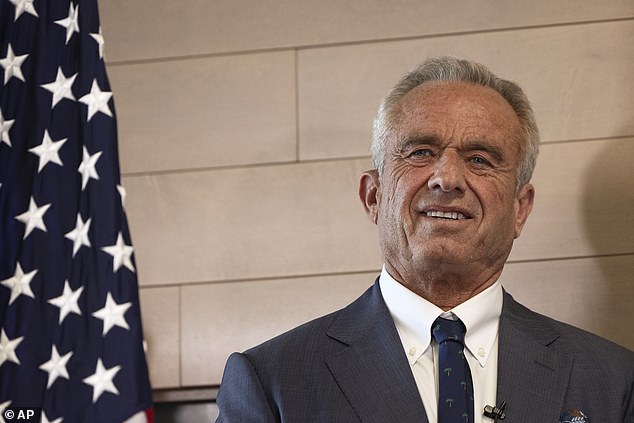
Health Secretary Robert F Kennedy Jr stated that Americans will have clarity regarding the cause of the nation's 'autism epidemic' by September.
Kennedy told President Donald Trump On Thursday, the Department of Health and Human Services initiated a substantial testing and research initiative involving numerous scientists aimed at uncovering the reasons behind this issue. Autism numbers have risen sharply in the United States. .
The Secretary asserted that within fewer than six months, "we will identify the cause of the autism epidemic and will manage to remove those risk factors."
Kennedy's statement follows the fact that one out of every 36 children in the United States has been diagnosed with autism, totaling nearly 2 million individuals.
During the early 2000s, this figure was approximately one in 142, representing a fourfold increase. Currently, the U.S. rates exceed those of numerous comparable countries.
Kennedy indicated that recent figures suggest the rates 'are rising once more,' approaching one in every 31.
Trump and Kennedy have targeted autism in their 'Make America Healthy Plan,' with Trump stating last month: 'There's something really wrong.'
Last month, the CDC stated it would look into the matter possible connection between vaccinations and autism , although it's uncertain how closely Kennedy is associated with that research.

The connection between vaccines and autism was debunked in over 1,000 studies, yet experts continue to address this misconception. expressed worries about ecological elements like microplastics and pesticides.
They've also observed that improved diagnostics have made it simpler for physicians to identify the condition, particularly among previously neglected demographics such as girls and adults.
At a Cabinet meeting, Trump replied to Kennedy stating, "There won’t be any larger press conferences than that," and proposed, "it seems like some artificial external factor must be causing these issues."
The President added: "If you manage to provide an answer about when you cease consuming something—whether it’s stopping your diet or perhaps getting an injection—it could be due to some factor."
It's not clear which researchers will participate or precisely what 'exposures' the team will examine.
Autism is a neurodevelopmental condition impacting communication, learning, and behavioral patterns.
Typically, individuals with the condition receive a diagnosis by age five; however, some may be identified as early as two years old.
The research published earlier this year in JAMA Network Open Autism diagnoses in children aged five to eight increased by 175% from 2011 to 2022, rising from 2 cases per 1,000 individuals to 6 cases per 1,000.
Nevertheless, the most significant rise occurred in the age group of 26 to 34-year-olds, showing a dramatic 450 percent surge, indicating that many experienced delays in receiving a diagnosis.
This indicates that physicians have become more skilled at diagnosing the condition instead of there being an increase in the number of cases.
Furthermore, revisions made to the Diagnostic and Statistical Manual of Mental Disorders (DSM-5) in 2013 consolidated autism, Asperger syndrome, and pervasive developmental disorder into a single classification known as autism spectrum disorder.
This could have resulted in an increase in the number of children diagnosed with autism.
However, several recent investigations have indicated that environmental elements such as contamination might also be contributing factors.
A 2023 review Individuals with a hereditary inclination towards autism, like having a parent diagnosed with the disorder, who experienced environmental contamination during their childhood showed a higher likelihood of developing autism compared to those not subjected to such pollution.
Previous studies conducted at Harvard have also revealed that exposure to air pollutants such as particulate matter during early childhood can be detrimental. could increase the chances of developing autism by up to 64 percent .
Exposure during fetal development might increase the risk of ASD by 31 percent.
Experts proposed that the fine particles inhaled during early childhood or even before birth might pass through the bloodstream and circumvent the protective barriers of the brain, leading to inflammation that impedes neural growth.
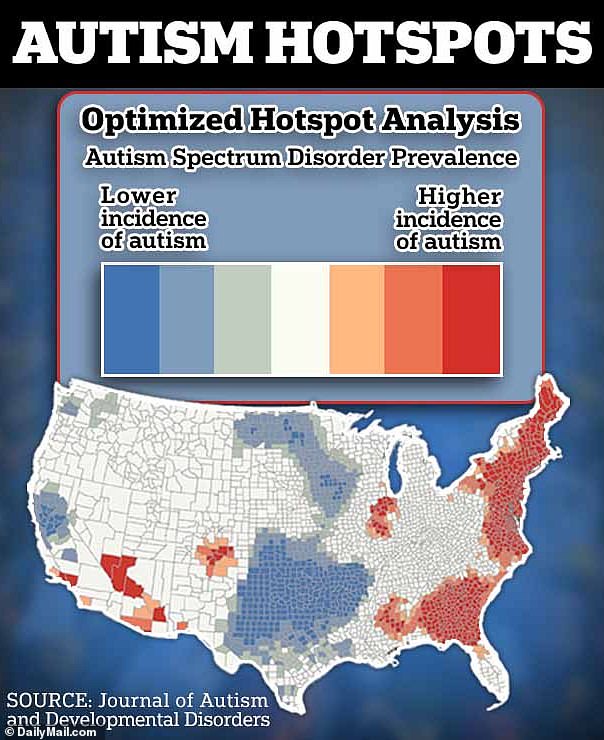
An A research paper from Australia that was released earlier this year Additionally, research indicated that male children exposed to the endocrine disruptor Bisphenol A (BPA) during pregnancy were six times more likely to receive an autism diagnosis before turning 11 compared to those not exposed.
The team proposed that Bisphenol A (BPA), commonly used in lining both plastic and metallic food containers, is linked to neurobehavioral alterations related to autism, highlighting its increasing presence as a contaminant in today’s environment.
The US has also witnessed an increase in the usage of synthetic pesticides, which certain individuals believe might contribute to this issue as well. The usage of these chemicals has multiplied fiftyfold since 1950.
Some research suggests that as much as 80 percent of Americans have measurable amounts of pesticides in their bloodstream.
In the previous year, the Environmental Protection Agency (EPA) declared an urgent ban on the use of the pesticide dimethyl tetrachloroterephthalate (DCPA or Dacthal). This decision was made after findings indicated that infants exposed to this chemical during pregnancy might have a higher risk of being born with low birth weight as well as reduced IQ levels and developmental issues.
However, vaccines have long since been debunked as a cause of autism.
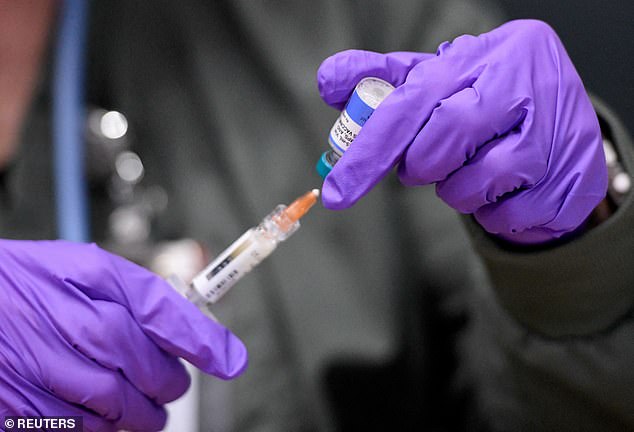
This concept originated from a now-discredited study conducted by British researcher Andrew Wakefield in the late 1990s. The investigator, who has had his qualifications rescinded, linked an increase in autism cases to the extensive use of the MMR vaccine, designed to protect against measles.
Nevertheless, the government's research library, PubMed, houses over 1,000 studies refuting the connection between vaccines and autism.
Kristyn Roth, a spokesperson for the Autism Society of America, informed the Associated Press that autism organizations haven’t been part of these talks. She expressed reservations regarding Kennedy’s intentions to explore potential connections between autism and vaccinations.
She stated: 'There is significant worry that we are regressing and reassessing theories that have been discredited.'
Experts have likewise criticized Kennedy's plan for being hasty and ineffective.
Dr. Lisa Settles, who leads Tulane University's Center for Autism and Related Disorders, stated CNN 'Formulating a research program would require more than five months.'
So, how do you plan to develop this program, gather the data, and analyze it within five months? It seems quite impractical. ... I certainly don’t believe that the research suggested right now could be entirely unbiased.
Read more
0 Comments:
Post a Comment