AD (728x60)

GAGBOX is your one source to humor and fun

Sunday, April 13, 2025

Weirdest and Wackiest Homes Hit the British Market: A Look Inside

A lot of us are painfully aware that searching for a house can be stressful, even under the best circumstances.

Locating the perfect property is undoubtedly challenging; at times, it might seem as though you'll never find 'the one.'

Despite searching for many hours online in an attempt to find something appropriate, a house that appears ideal virtually might turn out to be subpar when seen in reality — real estate agents often mislead clients with deceptive representations.

However, you would be amazed by some of the properties agents have attempted to sell over the years—and perhaps even more stunned by those that have actually managed to find buyers.

From a facility featuring prison cells in its lower level to a dwelling created for It looks exactly like a Wetherspoons pub. Over the years, various eccentric homes have been introduced into the marketplace.

At MailOnline, we're taking a closer look at some of the strangest and most bizarre instances.

Stale clutter fetches £27,000 above the listed price

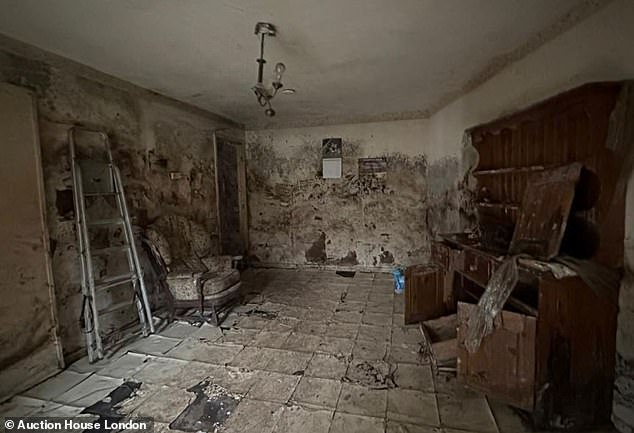
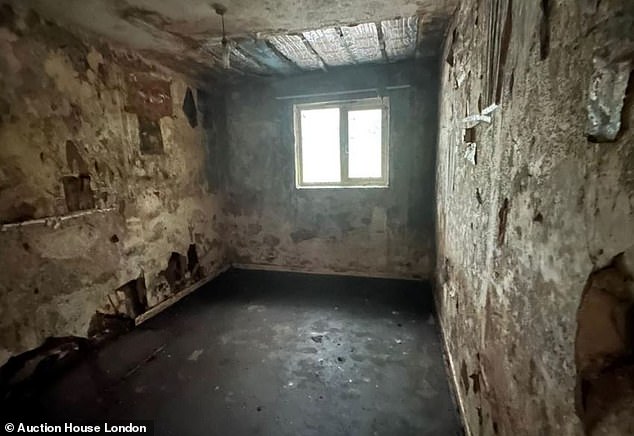
A two-bedroom apartment infested with black mold somehow fetched £27,000 above its listed price just a few days ago.

The property located in Thamesmead, southeast London, London Initially priced at £90,000 by Action House London, it was soon purchased by an eager buyer for £117,000.
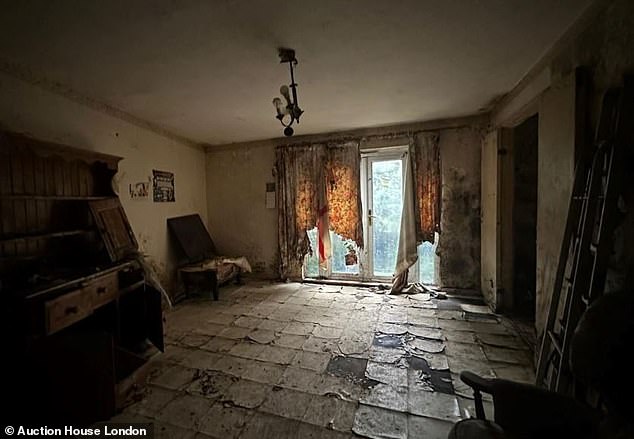
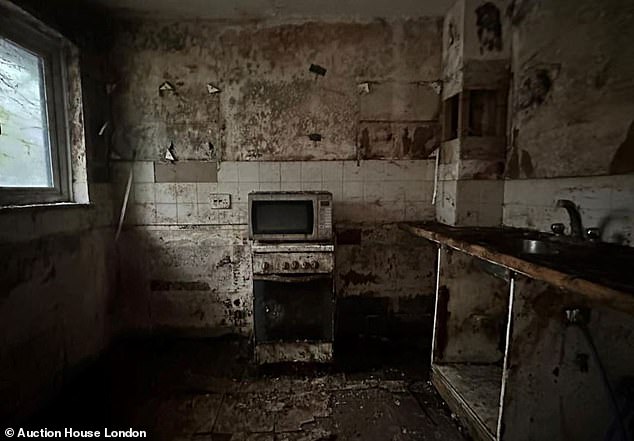
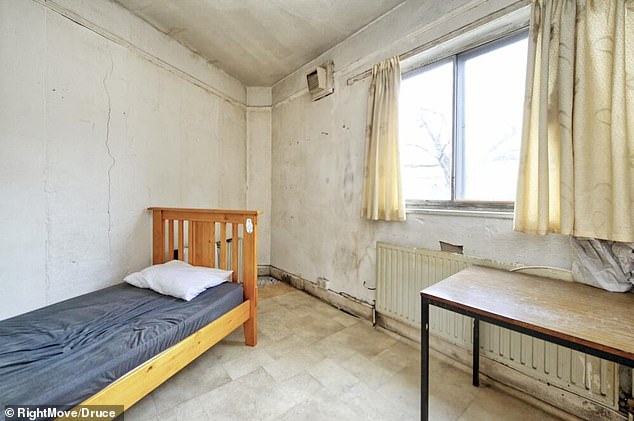
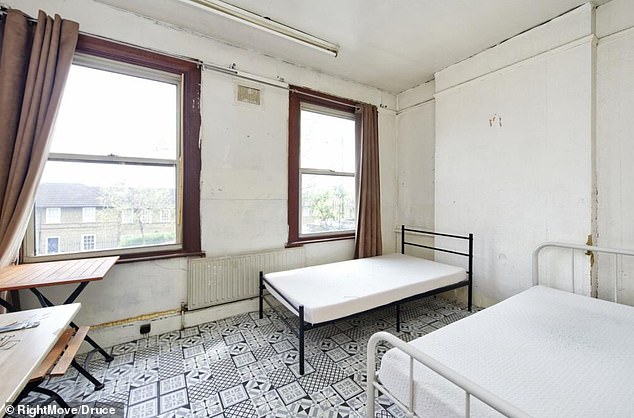
Images of the apartment exposed its deplorable state, featuring mold-infested and torn walls, absent floor tiles, and tattered curtains visible across the entire space.

However, a representative from Auction House London, the listing agency, stated that they were not astonished to observe the apartment sell for more than its listed price.

As suggested, 'This would be a perfect addition for someone looking to enter the real estate market and renovate the property, whether to reside in it or resell.'

'Many individuals search for properties at auctions with the intention of developing them further; therefore, end-user properties are rarely included in our listings.'

The person who purchased the apartment will definitely face a substantial renovation project.

I can sense that house": Britain's most atrocious "man cave

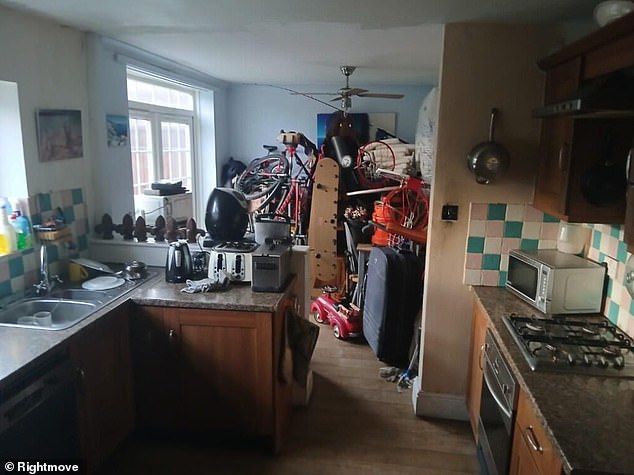
Home seekers were taken aback when they came across this messy man cave listed for sale.

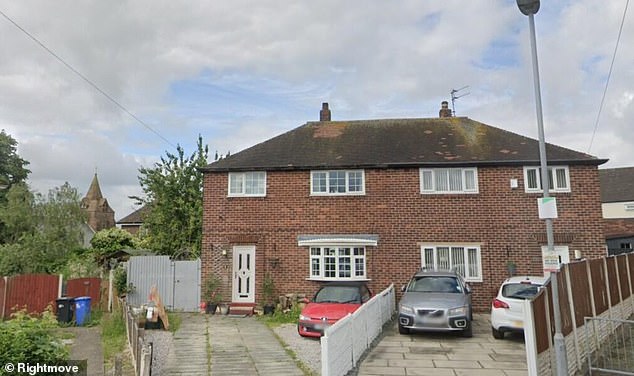
This month, the Cheshire property was listed for sale at a guiding price of £185,000. - However, many believe it will never be successful.

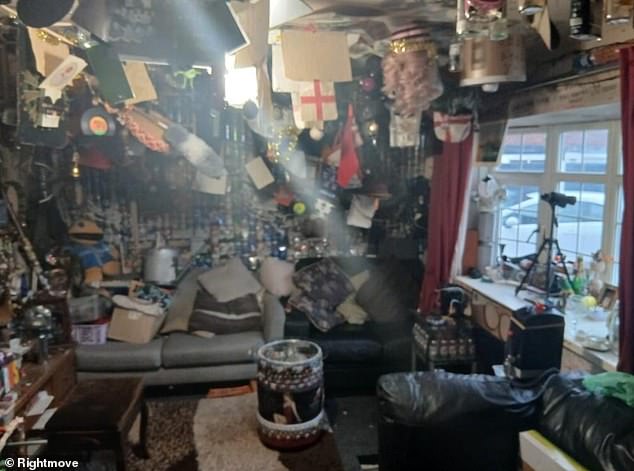
The home’s description highlights the unusual inside of what appears to be an ordinary three-bedroom linked house, with its walls adorned by crushed Stella Artois and Foster’s beer cans.
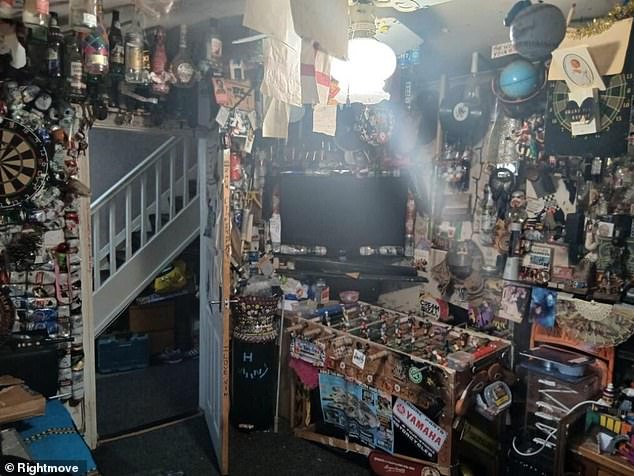
It seems the homeowner also has a penchant for spirits and wine, as evidenced by their decision to attach the caps of empty glass bottles to their ceiling.

The man cave includes a foosball table, a couch, and an armchair positioned opposite a compact TV, surrounded naturally by discarded soda cans.

On a TikTok post featuring the peculiar property, many viewers chimed in with their opinions through the comment section.

One argued that it won’t be considered as selling unless it’s drastically undercutting prices, even though it seems overpriced.

'I can sense that house,' remarked another.

A family member of a previous homeowner commented, "That used to be my auntie's house. It’s unfortunate how much the recent owners have altered it."

'The worst bargain listing' priced at £700,000

A London residence described as being worse than a 'Siberian gulag' has been listed for sale at £700,000. earlier this month The prompted comment suggests it could be the lowest valued property ever listed. .

The small two-bedroom house, which can surely be referred to as modest, stands as described. located in Kensington and Chelsea, West London, over a store.

Characterized as a one-of-a-kind mixed-use development prospect, the property had been previously sold back in 2014 for only £65,000 — indicating that the current sellers aim to achieve over tenfold their initial investment with this sale.


Confused potential buyers turned to Reddit to express their shock at the house's 'exorbitant' listed price.

One user, kirstytheworsty, commented: 'Their use of the term "unique" clearly indicates that an estate agent was frantically searching for a way to politely describe this shack.'

Someone else wondered if the property included a kitchen—at which point it was confirmed that it did not have one. Meanwhile, another person sardonically commented, “I love what you’ve done with this place.”

"Head to Your Cell!" Parents Can Now Send Misbehaving Kids to Jail at This Facility

A historic courthouse featuring prison cells in its lower level became available to rent for £750-a-month in Wakefield, Yorkshire, in 2023.

Referred to as a paradise for crime enthusiasts, this two-bedroom apartment is a transformation of the former Magistrates Court, where cells can be rented as extra storage space for an additional charge.

Some individuals jokingly suggested that the rooms might also serve as a disciplinary measure for unruly kids at home.

A home seeker who posted the listing on social media commented, "PrISON BASEMENT, FOR THOSE FRIENDS YOU REALLY CAN'T STAND."
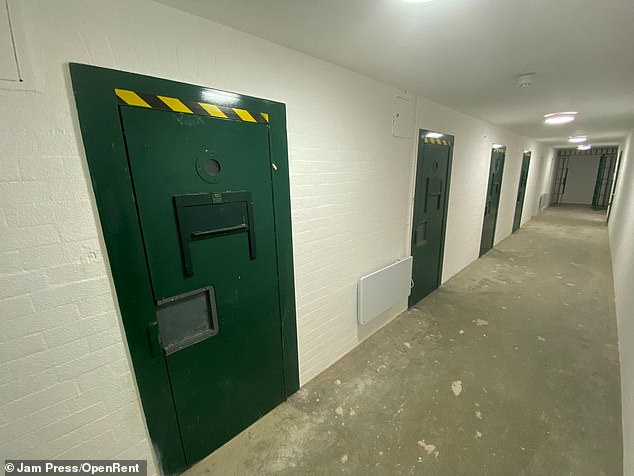
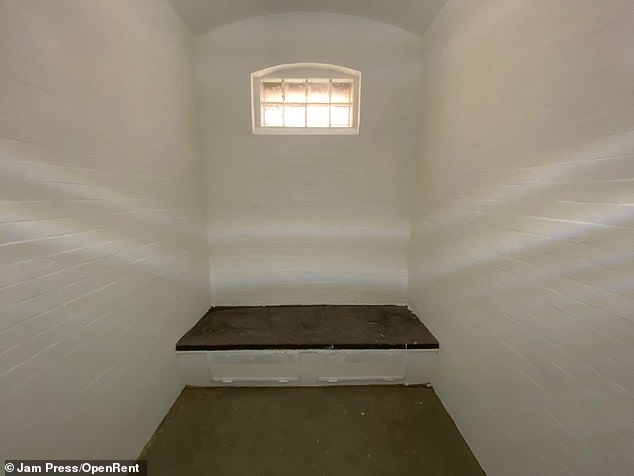
The posting gained numerous likes and remarks from other entertained users.

'Extremely secure storage. I initially thought about renting one of the cells for use as an office space, but then I figured it would probably result in the gloomiest daily journey and work environment ever,' someone joked.

The Wetherspoon cottage complete with signature 'tacky carpets'

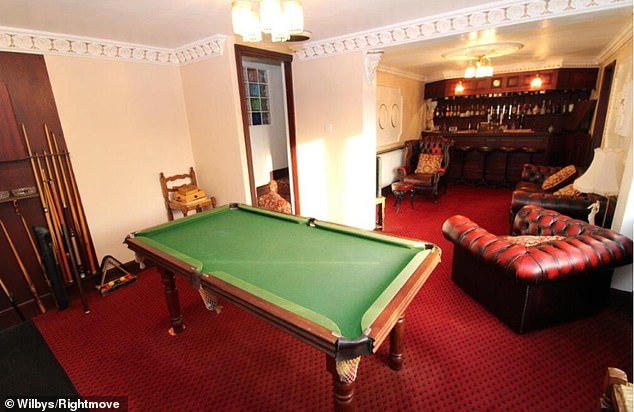
Boasting its very own bar, red carpet, and a pool table, the unusual Barnsley bungalow caught the attention of TikTok creator Housing Horrors earlier this month.

The listing price for the property was set at £400,000 and intended to resemble a Wetherspoons establishment. .

In a TikTok video, the user guided their followers through the strange property. observing its peculiar living space and antiquated kitchen .

"The inside of this house resembles a Wetherspoons, take a look," he commented.

This is a four-bedroom bungalow located in Barnsley with a price tag of £400,000. You won’t fully appreciate it from just the exterior; let’s take a look at what lies within.'

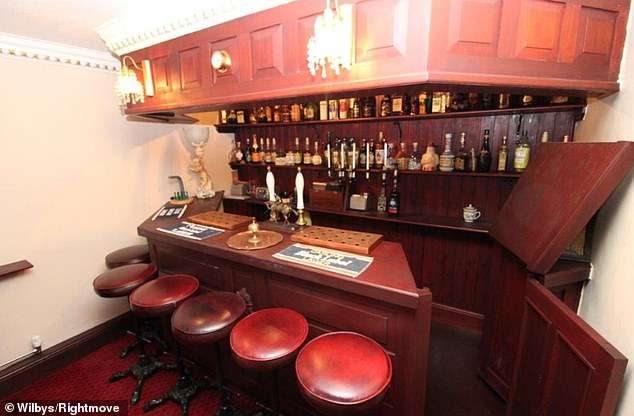
'Thus, what we have here is the living room which has been transformed into a complete bar. If I came across this image without any background information, I would honestly think it was a compact Wetherspoons pub located in a village or a small town.'

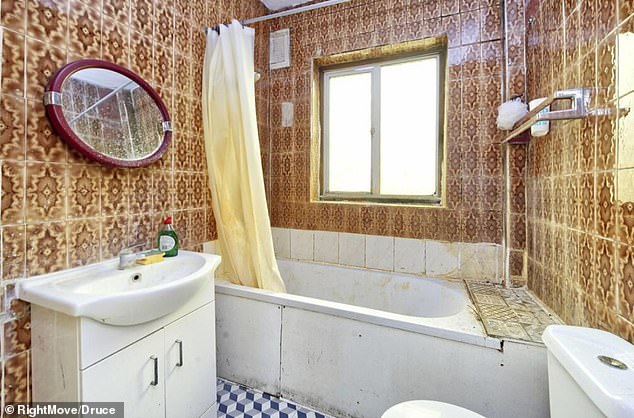
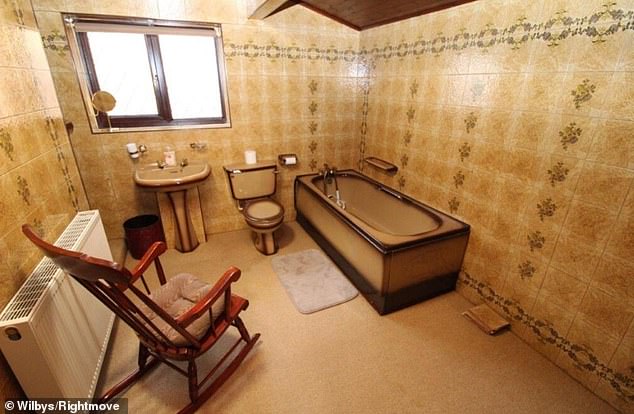
The images of the property revealed mostly brown and dated interiors, featuring a bathroom reminiscent of the 1970s style.

Housing Horrors, unable to believe what he saw, exclaimed, "This is the ultimate cherry on top for me. Clearly, this doesn’t have anything to do with Wetherspoons, but check out the 1970s-style bathroom everyone."

That’s completely outlandish. These types of bathrooms aren’t commonly seen. This particular restroom should probably be exhibited in a museum since, in two or three decades, such designs will likely become obsolete.

MINISCULE apartment smaller than a parking spot went on sale for £270,000.

Another striking illustration of London's exorbitantly priced real estate market involves a flat that is smaller than a parking space. listed for £270,000 .

The apartment directly across from Harrods in Knightsbridge, West London, which measures only 6.6 meters, was so small that it could accommodate nothing more than a compact single bed and a microwave.

Nevertheless, the advertisement for this small flat, featured on Rightmove through the agency Grow Portfolio, oddly referred to it as a "beautiful studio apartment." which represents the ultimate in luxurious urban living.


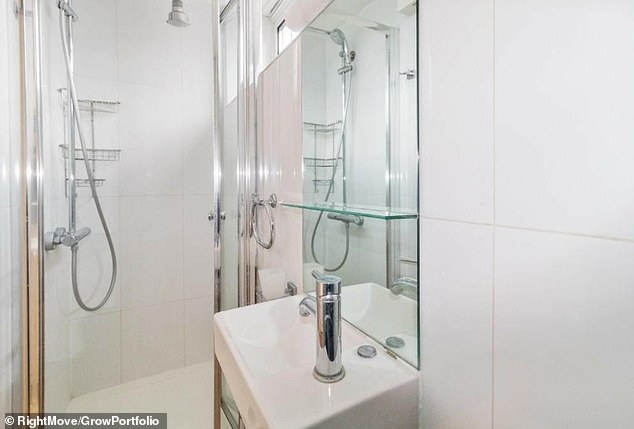
The interior is extremely compact, placing the stove right next to the bed, while a tiny individual bathroom sits across from it.

The bathroom is equally compact, featuring a tiny sink, toilet, and shower.

For storage purposes, there are only two shelves in the primary living area, along with a built-in wardrobe and a cabinet next to the microwave.

Is this giveaway really valuable?

A terraced home located in southern Wales – complete with a garden – was in such an deplorable state that It was available at a starting price of £0.

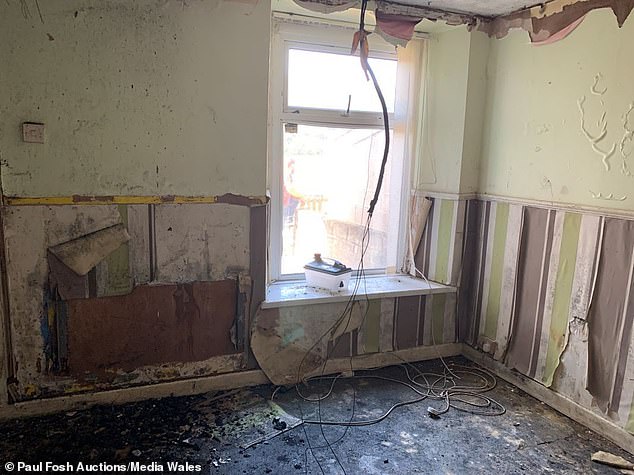
The recently acquired Tredegar residence appeared dignified externally but was entirely emptied following a blaze.

As described by the auctioneers as being in "poor condition," images of the property reveal the damaged interior.

The fire damage encompassed soot, smoke, and collapsed ceilings—elements that might deter numerous potential purchasers.

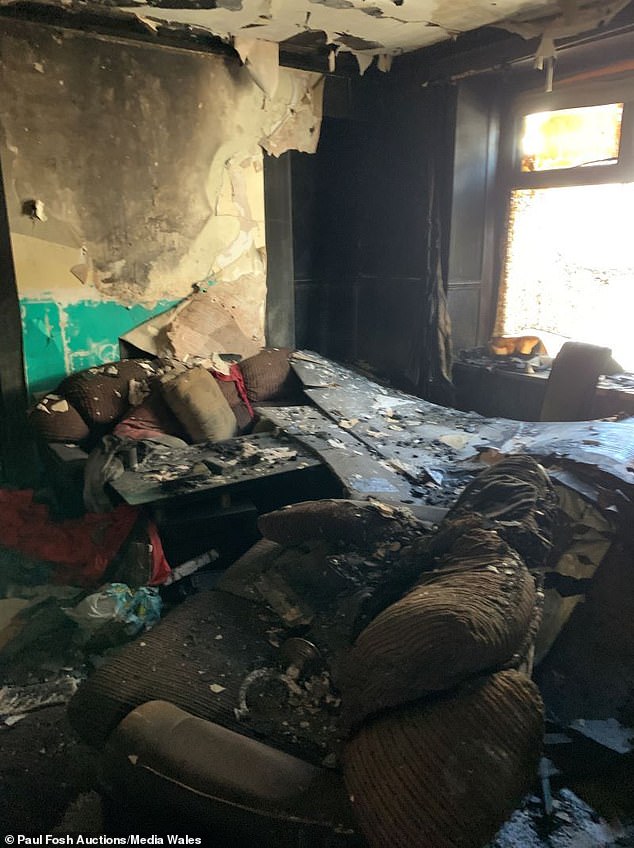
However, the auctioneers stayed optimistic that the house would still find a buyer.

For certain, anyone who grabbed that complimentary item will require every penny they possess for renovations.

A £825,000 house appears ideal... yet it includes an extremely peculiar mural.

This Northamptonshire estate left many stunned due to an exceptionally unexpected characteristic. .

The charming house featured a mural of a hedgehog in its dining room.

The unusual interior design decision in an otherwise average house grabbed the notice of people interested in homes on social media and sparked differing views.

The $1 million property appears like an ordinary English countryside house from the exterior, and this idyllic ambiance carries through indoors, which makes the large woodland creature painting even more incongruous.

Many people were puzzled by this feature, stating they were surprised when browsing through the photos in the listings.


One woman posed this question on Reddit: 'That genuinely had me laughing out loud; can someone explain the train of thought behind that decision?!?'

The house appears to be constructed meticulously for sale purposes; it’s fashionable yet restrained, with ample furnishings that create a lived-in feel without being too personalized. Then suddenly—wham—a hedgehog-themed wallpaper emerges unexpectedly, catching you off-guard as soon as you relax. This was noted by another commenter.

"What an odd inclusion in what would otherwise be a charming and well-maintained home? Do these folks realize they’re attempting to sell it?" chuckled a third observer.

'Someone mentioned, "Just picture yourself seated for dinner when suddenly it starts watching you."'

Others, nonetheless, had only positive things to say about the hedgehog.

"That sounds great. You should definitely enjoy having some fun with your home," someone commented.

Read more
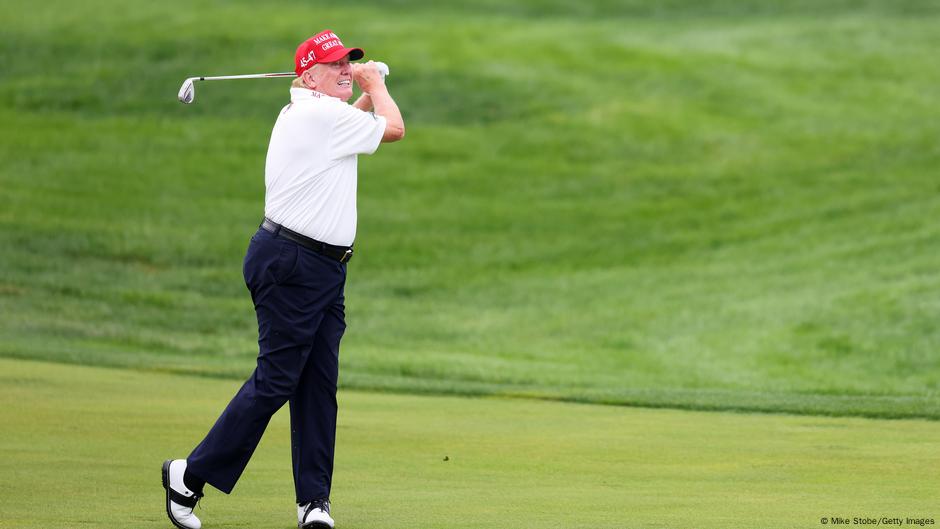
US: Trump's Doctor Reports 'Excellent' Health

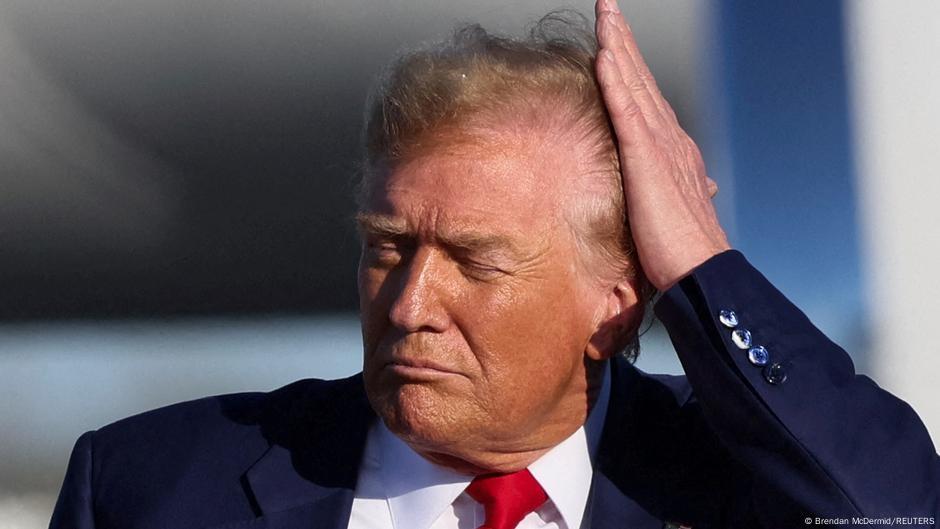
President Donald Trump received a clean bill of health after undergoing a standard medical examination. According to a report from the White House, the 78-year-old maintains good health due to an "active lifestyle," with no signs of cognitive decline noted.

US President Donald Trump is reported to be in "outstanding cognitive and physical health" and is "entirely capable of fulfilling the responsibilities of the Commander-in-Chief and Head of State," according to statements made by White House doctors on Sunday. following a standard health check for the 78-year-old .

As stated in the report by ex-US Navy Captain Sean Barbarella, Trump has previously dealt with elevated cholesterol levels; however, they are currently well managed through medication. The president takes two distinct drugs for this condition—rosuvastatin and ezetimibe—which are widely recognized as Crestor and Zetia respectively.

It is said that he also applies mometasone cream to manage his rosacea, which can lead to skin redness on the face.

Since his last physical as president in 2020, Trump has reportedly lost 20 pounds (9 kilograms) in weight and currently weighs around 224 pounds (101.6kg).

Is Trump healthy?

Captain Barbarella’s report attributed Trump’s robust well-being to his “vigorous lifestyle,” mentioning countless daily meetings, press conferences, and “multiple triumphs at golf tournaments.”

The report noted scarring on Trump's ear resulting from a gunshot injury sustained during an assassination attempt At a campaign event in Pennsylvania last year, he stated that his hearing was fine.

“I believe I performed admirably,” Trump stated to journalists aboard Air Force One on Friday following the examinations, mentioning he had taken “every test imaginable, I was there for quite some time, doing my annual checkup.”

Trump has never indulged in cigarettes and abstains from alcohol, yet he apparently enjoys fast-food burgers and thoroughly cooked steaks frequently as part of his meal plans.

What about Trump's psychological well-being?

At 78 years old, Trump became the oldest U.S. President to take office, surpassing Ronald Reagan’s previous record by about five months; Biden had been slightly younger at inauguration when he defeated Trump in 2020 as the Democratic nominee.

Despite this, Trump has consistently attempted to depict himself as considerably younger and more fit compared to his predecessor, who increasingly notable cognitive issues ultimately pushed him out of the 2024 presidential election race.

The report indicates that Trump achieved a perfect score of 30 out of 30 on the Montreal Cognitive Assessment, a test where participants undertake various exercises aimed at assessing their focus, recall abilities, and conceptual reasoning skills.

Trump informed journalists that he decided to take a mental acuity test to “stand out a bit” from Biden, who currently is 82 years old.

Has Trump had vaccines?

Captain Barbabella’s report stated that President Trump underwent vaccination as advised, covering everything from routine inoculations to those against COVID-19. He was infected with the virus in October 2020, resulting in his admission to the hospital.

Previously, Trump frequently circulated disproven assertions regarding potential connections between vaccinations and autism. Additionally, his Health and Human Services Secretary, Robert F. Kennedy Jr., has expressed skepticism about vaccine safety and effectiveness, which goes against scientific consensus.

Author: Matt Ford (with AFP, dpa, Reuters)

International Edition: Unmasking the Common Triggers of Hot Flashes

Hot flashes, which are referred to as vasomotor symptoms, constitute a common medical issue, and they are typically the primary reason why menopausal women pursue some form of treatment.

These episodes typically arise abruptly and result in severe warmth accompanied by sweating in the facial area, neck, and upper torso. The skin might also flush, appearing redder as though one has been blushing.

A sudden heat surge might also lead to shivers and an accelerated heart rate.

Provided by Syndigate Media Inc. ( Syndigate.info ).

Owaisi Urges PM Modi to Rethink Waqf Act, Warns of Imposed Ideology

Hyderabad (Telangana), [India], April 13 (ANI): All India Majlis-e-Ittehad-ul-Muslimeen ( AIMIM ) leader and Member of Parliament for Hyderabad Asaduddin Owaisi On Sunday, they pleaded with Prime Minister Narendra Modi to reassess the Waqf (Amendment) Act, 2025, arguing that this legislation contradicts their stance. Constitution of India and enforces a particular ideology on the country.

"We urge the Prime Minister to kindly review this Act. You are enacting legislation that goes against Constitution “By being here, you are trying to impose your ideology on our nation,” Owaisi stated at a press conference.

He emphasised that the government should be guided by Indian nationalism and constitutional values, not ideological preferences. "Your ideology should be Indian nationalism and the Constitution ," he added.

Owaisi also questioned the government's approach toward religious communities, claiming that the law discriminates against Muslims.

He questioned how something beneficial to Hindu and Sikh communities could be seen as detrimental to Muslims.

Earlier today, Owaisi announced a demonstration against the Act. He stated that a public gathering will take place on April 19th from 7 PM to 10 PM at Darussalam in Hyderabad. The event, organized by the All India Muslim Personal Law Board, aims to protest against the Waqf (Amendment) Act 2025. According to Owaisi, this meeting will be led by the Board’s President, Khalid Saifullah Rahmani.

Owaisi stated that representatives from the Muslim Personal Law Boards of Telangana and Andhra Pradesh, as well as prominent Muslim organizations from these regions, will take part in the demonstration and speak to the crowd.

"They plan to inform the public via their addresses that this Waqf (Amendment) Act does not benefit the Waqf. Additionally, we are attempting to engage with the Waqf Committee members, and should their availability allow, they might attend the meeting," he stated.

The Rajya Sabha passed the Waqf (Amendment) Bill, 2025, on April 4 with 128 votes in favour and 95 against. The Lok Sabha had earlier cleared the Bill following a lengthy debate, with 288 members voting in favour and 232 opposing it.

President Droupadi Murmu accorded her approval to the Bill on April 5, thus enacting it into law.

Included among those who have challenged the Waqf (Amendment) Act in court are AIMIM MP Asaduddin Owaisi , Congress members Mohammad Jawed and Imran Pratapgarhi, AAP legislator Amanatullah Khan, and Chandra Shekhar Azad, who leads the Azad Samaj Party and is also an MP.

Other notable figures include Samajwadi Party member of parliament Zia Ur Rehman Barq representing Sambhal, Maulana Arshad Madani who leads the Jamiat Ulema-i-Hind organization, the group known as Samastha Kerala Jamiatul Ulema based in Kerala, the Social Democracy Party of India, the Indian Union Muslim League, along with an NGO named the Association for Protection of Civil Rights.

The All India Muslim Personal Law Board (AIMPLB) has similarly contested the Act, stating that they firmly opposed the modifications approved by Parliament, deeming them "arbitrary, discriminatory, and rooted in exclusivity."

Rajya Sabha MPs Manoj Jha and Faiyaz Ahmad from Bihar's Rashtriya Janata Dal (RJD) have also challenged the Waqf (Amendment) Act, 2025, arguing that it facilitates large-scale government interference in Muslim religious endowments. RJD MLA from Bihar Muhammad Izhar Asfi also challenged the Act.

Tamil Nadu's ruling party DMK has also joined the legal challenge. Its MP A Raja, who was a member of the Joint Parliamentary Committee on the Waqf Bill, has approached the apex court.

Intervention applications have been filed in the Supreme Court in support of the Waqf (Amendment) Act, 2025, stating that the amendments are in consonance with the scheme of the Constitution of India, and that there is no violation of any right of any member of the Muslim community.

The Waqf (Amendment) Act, 2025, seeks to focus on improving the management of waqf properties, empowering relevant stakeholders, improving the efficiency of survey, registration, and case disposal processes, and developing waqf properties. (ANI)

Provided by SyndiGate Media Inc. ( Syndigate.info ).

CAN Demands Justice: Condemns Plateau Killings, Calls for Action

The Christian Association of Nigeria has condemned the recent spate of killings in Plateau State, describing them as barbaric and a grave affront to human dignity.

On Sunday, Archbishop Daniel Okoh, the president of CAN, issued a statement expressing profound grief regarding the attacks that occurred on April 4 in Bokkos and Mangu Local Government Areas. These incidents resulted in numerous fatalities and injured many more individuals.

Okoh characterized the violence as "senseless" and a significant danger to the country's cohesion.

He stated, "With profound grief, CAN firmly denounces the latest surge in barbaric murders in Plateau State, notably the assaults that occurred on April 4, 2025. These incidents resulted in the deaths of numerous unarmed civilians within the Bokkos and Mangu Local Government areas. Such indiscriminate acts of brutality are not just egregious violations of human worth and the respect for life; they also pose a significant danger to our country’s cohesion and tranquility."

The association president, emphasizing prompt and firm measures, called upon security agencies to ensure the criminals face justice speedily.

He likewise urged the government at every level to step up their attempts to protect susceptible populations and stop additional loss of life.

"We urge the security agencies to take prompt and firm action in apprehending those responsible for these acts. Additionally, we encourage the government at every level to enhance their endeavors to protect all communities and stop further violence. The ongoing loss of life under such heartbreaking conditions is entirely untenable," he stated.

Out of solidarity with those who grieve, CAN provided prayers seeking solace and recovery, especially as the onset of Holy Week—an intense time of contemplation within Christianity—approaches.

"God grant solace to those who grieve, healing to the injured, and peace to all hearts burdened with turmoil," he said.

Leveraging the symbolism of Palm Sunday, which marks Jesus Christ’s modest arrival in Jerusalem, the CAN president urged Nigerian leaders to adopt a mindset of servitude and transcend their individual or partisan interests when tackling the country's critical issues.

He stated, " Genuine leadership becomes crucial when lives hang in the balance and communities face hardship."

Jesus' decision to enter Jerusalem on a donkey—which symbolizes peace and servitude—continues to be a perpetual model.

He likewise delivered an impassioned call for people from all walks of life in Nigeria to come together with optimism and shared goals, encouraging them to act as promoters of peace and fairness within their households and neighborhoods.

"As we raise our palm branches today, let them symbolize not just acts of devotion but also signify our unified commitment to strive towards a peaceful and cohesive Nigeria," he declared.

Provided by Syndigate Media Inc. ( Syndigate.info ).

Leadership's Essential Guide to Enhancing Employee Mental Health at Work

In today’s demanding corporate landscape, the mental well-being of staff members has become an essential element for organizational achievements. Apart from boosting productivity alone, managers who emphasize psychological security develop settings that encourage creativity, boost loyalty, and ensure smooth teamwork. This thorough manual delves into ways through which leaders can cultivate workspaces that safeguard and elevate the mental health of their employees.

Understanding the Landscape

The contemporary office environment poses distinct hurdles for mental health. The lines separating professional duties from private time have become increasingly indistinct, particularly with remote and mixed-mode arrangements. This shift has led workers to encounter new sources of strain. Research repeatedly indicates that occupational pressure plays a substantial role in fostering feelings of worry, dejection, and exhaustion. Statistics reveal that about three-quarters of staff members acknowledge occasional bouts of weariness, whereas one-fourth admit to frequent or constant fatigue due to job-related pressures.

For leaders, acknowledging these facts goes beyond empathy—it’s crucial for sustaining their businesses. Companies lacking adequate mental health resources often experience greater employee turnover, more frequent absences, decreased efficiency, and less innovation. In contrast, enterprises that allocate funds towards promoting psychological well-being can achieve significant financial gains; research indicates they may receive up to $4 back for each dollar invested.

Creating Psychological Safety

The cornerstone of an employee’s mental well-being lies in psychological safety—the collective understanding that individuals within a group feel secure when taking personal risks without worrying about adverse repercussions. Notably, Google's Project Aristotle highlighted psychological safety as the key element for successful teams.

To cultivate psychological safety, leaders should:

Encourage Open Communication

Frequent meetings that extend past just updating projects provide opportunities for genuine connections. Such discussions ought to incorporate open-ended queries regarding team members' feelings and the assistance they may require. Establishing various communication avenues—some accessible publicly, others privately—allows staff to select their preferred comfort zone when voicing worries.

Legal experts from Steinlaw.com, a sexual assault law firm, emphasize that clear communication channels are essential not only for general wellbeing but also for addressing serious workplace issues like harassment that can severely impact mental health.

Model Vulnerability

When leaders openly discuss their own difficulties and periodic setbacks, they help make discussions around mental health more commonplace. By appropriately sharing their personal journeys regarding stress handling or achieving work-life harmony, these executives can break down the notion that being vulnerable equates to lacking strength.

Respect Boundaries

The expectation for constant accessibility at all times has led to unbalanced attitudes towards work hours. It is crucial for leaders to set and uphold distinct limits by refraining from sending unnecessary messages outside designated working hours and promoting the idea that employees should completely disengage during their leisure time.

Implementing Supportive Policies

Aside from cultural components, structured policies offer the framework for mental well-being:

Flexible Work Arrangements

Flexibility in when and where work happens acknowledges that employees have different needs and personal responsibilities. This might include remote work options, flexible start and end times, or compressed workweeks. The key is focusing on outcomes rather than hours visible at a desk.

Comprehensive Benefits

Mental health benefits should be on par with physical health coverage. This includes adequate insurance coverage for therapy and psychiatric services, employee assistance programs, and digital mental health resources. Progressive organizations are increasingly offering stipends specifically designated for wellness activities.

Leave Policies

Ample compensated leave that staff can utilize freely without fear of repercussions is crucial. It should encompass mental health days that do not necessitate excessive paperwork or justifications. To address the inclination to skip vacations, some organizations have adopted unrestricted Paid Time Off policies or set required minimum holiday periods.

Training and Education

Reducing the stigma associated with mental health necessitates continuous education:

Mental Health First Aid

Similar to how numerous work environments train their personnel in basic first aid for physical injuries, mental health first aid prepares specific team members to identify indications of psychological stress and offer suitable immediate assistance along with guidance towards professional help.

Manager Training

Direct supervisors require specialized instruction to identify indicators of mental health issues, engage in compassionate discussions, and provide suitable support or recommendations. The education must balance empathetic approaches with actionable measures while adhering to regulatory guidelines.

Resilience Building

Seminars focused on enhancing abilities in managing stress, practicing mindfulness, and regulating emotions equip staff members with useful techniques to handle work-related challenges. Such sessions ought to occur frequently and cover different topics to address the varying requirements and tastes of participants.

Creating Sustainable Workloads

Even the most effective mental health initiatives can't make up for consistently excessive workloads.

Realistic Expectations

Managers need to make sure that performance goals are ambitious yet attainable during regular work hours. This involves accurately evaluating what staff can realistically achieve and being open to modifying objectives as needed.

Resource Allocation

Supplying sufficient personnel, establishing clear project priorities, and implementing streamlined procedures minimizes avoidable stress. It’s crucial for leaders to frequently review work processes to remove inefficiencies and obstacles that lead to irritation.

Recovery Time

Following intense project phases, teams require some downtime. Incorporating ‘lower-intensity’ intervals post significant deadlines enables them to reflect, learn, and rejuvenate before facing the subsequent challenges.

Assessing and Refining Your Strategy

Ongoing evaluation and improvement are necessary for mental well-being programs.

Anonymous Feedback

Frequent pulse checks incorporating well-being indicators enable companies to spot potential issues before they escalate into major problems. These check-ins should cover topics such as stress levels, feelings of purposefulness, perceptions of support, and the balance between professional and personal life.

Utilization Data

Monitoring the use of mental health services (with respect for personal confidentiality) can help ascertain whether employees are indeed availing themselves of the provided assistance. A low uptake might suggest issues like stigma or obstacles to access instead of indicating an actual absence of necessity.

Return on Investment

Assessing enhancements in employee retention, productivity, and engagement aids in validating ongoing funding for wellness initiatives. Such assessments must include both numerical data and narrative insights, integrating personal anecdotes with statistical evidence.

Leadership's Ongoing Commitment

Above all else, ensuring mental well-being should not be viewed as a singular event or solely an HR concern. It requires leaders across all ranks to continually show that they prioritize employees' psychological health through their choices, distribution of resources, and individual actions.

By creating psychologically safe environments, implementing supportive policies, providing education, maintaining sustainable workloads, and continuously measuring outcomes, leaders can build organizations where employees thrive mentally and emotionally. In today's talent landscape, this commitment isn't just the right thing to do-it's a competitive advantage that drives innovation, retention, and organizational resilience.

The most successful companies understand that employee mental well-being is not just a bonus or amenity—it’s essential for their core business strategy, impacting how efficiently they can adjust, create new ideas, and thrive as businesses face growing complexity in today's market.

Provided by Syndigate Media Inc. ( Syndigate.info ).

Burna Boy: Musical Success In Nigeria Not Worth Celebrating

The elements people notice first about you in digital life are your profile picture and text. Your profile photo plays key roles on both social media and networking platforms so it smart to use appealing visual elements. Trying to find easy accessible tools that help you change your profile effectively is difficult to discover.

AI Ease Free Profile Picture Maker online will help you transform your profile. You can generate extraordinary profile images through this web-based tool which work without complex operations and produce results immediately.

This article explains how these Mini Tools by AI Ease function and demonstrates why they match what people need to upgrade their digital profiles while bypassing registration requirements and unnecessary payments. This guide teaches you to make profile images look superb using our system.

The Power of Personalization: How AI Ease Profile Picture Maker Lets You Express Your Unique Style

Your profile photo presents beyond visual content since it demonstrates your individual identity. The AI Ease Profile Picture Maker enables users to personalize all aspects from professional looks to playful styles to creative avant-garde profiles without difficulty. AI Ease Profile Picture Maker enables users to modify backgrounds alongside shaping and border options allowing you to create pictures that perfectly represent yourself.

The AIEase Profile Picture Generator enables users to develop a sophisticated and professional look for networking sites such as LinkedIn without these changes being noticeable on more relaxed social media platforms.

The integrated customization options let you tweak how your image appears by altering its size, shape, and viewpoint along with using zoom functions and adjusting behaviors. This platform lets you pick image traits that highlight your best angles or opt for frames that align with your desired style.

Generate Stunning Profile Photos Quickly Using AI Simplicity Profile Photo Creator

Your first digital interaction with others is typically via your profile picture. This image conveys your identity across various platforms like social media, professional networks, or gaming environments. The AIEase Profile Picture Generator assists you in transforming simple snapshots into sophisticated or creative profile shots using several straightforward steps.

Key Characteristics of the AI Ease Profile Picture Creator:

Automatic Background Removal

Our program automatically removes background elements to improve your image's clarity for professional applications.

Full Customization Options

Adjust and rotate your image as desired until you achieve the perfect look. Feel free to switch the picture format from round to square according to your preference, and choose a border color that complements your style.

Variety of Backgrounds

Select from various backdrops suitable for all events, whether you're aiming for formal environments or fun patterns.

No Sign-Up Needed

You can utilize the tool free of charge and without requiring an account or paying any fees. You have unlimited access to the tool at no cost.

Perfect for All Platforms

Our tool offers all the necessary social media image sizes that perform well across various platforms such as Instagram, Facebook, LinkedIn, and more.

Step-by-Step Guide: Using the AI Ease Profile Picture Creator

Step 1: Share Your Photo

Choose your favorite selfie and upload it to the AI Ease Profile Picture Maker tool. Just drag and drop your photo into the designated area using your cursor.

Step 2: Personalize Your Image

Once you upload your pictures, this tool will remove the background for you automatically. Following that, you have the option to tweak the image at its optimal viewing angle through zooming or rotation. Choose from various backdrop alternatives that align with your individual taste.

Step 3: Download and Apply Your Fresh Profile Picture

The completed image is prepared for downloading and can be used anywhere. It’s all set!

This straightforward process lets you make an online profile image that helps others notice you no matter what you do.

How AI-Powered Profile Picture Makers Assist You in Maintaining Consistency Across Various Social Media Platforms

Maintaining an effective online presence relies heavily on adopting key strategies. Consistency in branding helps establish recognition and trustworthiness for individuals or brands presenting themselves professionally. By utilizing tools like the AIEase Profile Picture Maker, users can create uniform profile pictures tailored to different platform specifications, ensuring coherence across all channels.

Optimized for All Platforms

Virtual platform adaptation with AI Ease allows users to generate profile photos that support every platform including both Instagram and TikTok and LinkedIn and Facebook. Your pictures will look uniform between social media platforms without any complications during transitions.

One Tool, Multiple Platforms

AI Ease simplifies the process for users by automating size adjustments and cropping for images across various platforms, eliminating the need for manual tweaking. This comprehensive solution manages all aspects of profile picture creation, allowing you to focus more on enhancing your personal brand and boosting user interaction.

AI Ease Profile Picture Generator for Companies: Elevate Your Business Appearance

Users can generate professional team member profile pictures effortlessly through this tool.

Businesses combined with corporate teams must keep their professional image constant as a priority. Through the AI Ease Profile Picture Maker, users from all backgrounds can utilize this tool to maintain efficient team profile design. The tool enables businesses to present their professional facade on LinkedIn profiles and social media platforms, and internal communication platforms.

Consistent Corporate Branding

Establish a corporate brand identity by making identical profile pictures available to every team member for an online appearance that presents your company with a harmonious professional presentation.

Quick and Easy Process

Using this platform, your team can create high-quality profile images for every member within just a few minutes, eliminating the need for manual adjustments or scheduled photo sessions.

Perfect for Employee Profiles

Each company requires professional staff profiles that instill confidence in clients via uniform and consistent employee portrait imagery.

Your Ideal Profile Picture Is Just a Click Away - Begin with AI Simplicity Now

Users can now generate the ideal profile image through the AI Ease Profile Picture Maker platform. AI Ease serves all users by providing the necessary tools to modify their images according to their precise visual requirements for either business-oriented LinkedIn needs or entertaining Instagram sharing. Create your ideal profile picture at this moment through AI Ease Profile Picture Maker so it can establish unforgettable first impressions on all your digital profiles.

Provided by SyndiGate Media Inc. ( Syndigate.info ).

FG Plans 8,880 New Primary Health Centers as Shettima Opens Trauma Centre in OOUTH

The federal government has sanctioned the creation of 8,880 additional primary healthcare centers nationwide.

This falls under the Comprehensive Health Sector Renewal Investment Initiative, as stated by Vice-President Kashim Shettima.

The vice president made this announcement on Saturday at the inauguration of the Sulaiman Adebola Adegunwa Trauma Centre located within the Olabisi Onabanjo University Teaching Hospital (OOUTH) in Sagamu.

The facility valued at more than N2 billion was presented to the teaching hospital by the industrialist and philanthropist, Asiwaju Sulaiman Adebola Adegunwa, as a gift for his 80th birthday celebration.

This cutting-edge facility will offer extensive and sophisticated trauma treatment featuring amenities like an elevator for smooth patient movement, three well-equipped operating rooms, a contemporary intensive care unit, top-tier imaging technology to ensure swift and precise diagnoses, specialized resuscitation areas for urgent life-saving procedures, and a High Dependency Unit (HDU) serving as a vital link between critical care and standard ward care.

Daily Trust reports that the facility would provide relief for accident victims along the Lagos-Ibadan expressway and Benin-Shagamu expressway which account for 41.5 per cent of accidents in the area according to the Federal Road Safety Corps (FRSC).

Shettima, who expressed great joy over the initiative at the center, called it a humanitarian act that would positively impact future generations.

He mentioned that the federal government has similarly enhanced higher educational institutions equipped to manage trauma, oncology, and infectious diseases.

He stated, "The administration is simultaneously funding the National Health Insurance Scheme, which offers every Nigerian citizen hope, along with a digital information management system designed for evidence-based decision-making in diagnoses."

The Sulaiman Adebola Adegunwa Trauma Centre embodies the federal government’s dedication to establishing a healthcare system that serves everyone, particularly during times of crisis when accidents occur, time is limited, and the gap between survival and tragedy hinges on the rapidness of emergency response, as he pointed out.

The Vice President stressed that in a country experiencing swift urban development, having a trauma center is indispensable rather than an option. He urged philanthropists, the business community, and affluent individuals to transcend personal successes and contribute towards constructing a robust nation.

Our past efforts to improve the healthcare system should be pursued collaboratively with joint effort from both governmental and non-governmental entities. Although we are a country brimming with potential, we also face significant challenges. Therefore, solving these issues shouldn’t fall solely on the shoulders of the government.

We require additional participants from the private sector, philanthropists, foundations, and experts to follow the example set by Otunba Adegunwa," he continued. "They should aim to surpass individual accomplishments and contribute to the nation’s progress.

The governor of Ogun State, Prince Dapo Abiodun, recognized the essential function of the center as an important establishment created for human welfare.

When he took office six years ago, he depicted the hospital’s condition as dreadful, mentioning that his administration has worked hard to revamp and rehabilitate the healthcare center to what it is now.

When I took office in 2019, my initial visit as part of the new administration was to this hospital, which at the time was in such poor condition that we declared a state of emergency for the facility. To address the situation, we formed a committee led by Dr. Yemi Onabowale from Redington along with several others tasked with advising us on strategies to revitalize the hospital.

Following their suggestions, we established and launched the hospital governing board, which hadn’t been around for quite some time. We welcomed Dr. Pa Adegunwa to collaborate and work alongside us. This way, emergencies—especially traumas resulting from road crashes and other severe situations needing prompt and skilled care—will now receive attention. It’s worth noting that these improvements come as both the busy Lagos-Ibadan Expressway and the adjacent Sagamu-Benin Expressway lead directly to our healthcare center,” he explained.

The Governor mentioned that this initiative is in line with his administration’s aim to provide accessible and cost-effective healthcare services to everyone, emphasizing that healthcare continues to be a top priority for the state government.

He stated, "We recognize that the cornerstone of a prosperous society lies in its capacity to offer prompt, targeted, and accessible healthcare services."

'The establishment of this Trauma Centre marks a significant milestone in the quest to strengthen Ogun State's medical infrastructure. It will greatly complement our ongoing efforts to reposition the healthcare sector towards enhancing the wellness and well-being of our citizens, especially in this trying time of global economic challenges.'

The donor reflected on how efficiently the hospital had used and cared for the audio-visual center he had contributed many years earlier, mentioning that it ignited a wish in him "to discover new ways I can support the health and well-being of our community through this essential facility."

He stated, "It gives me great satisfaction today to announce that the present Chief Medical Director at this very hospital, Dr. (Mrs.) Bunmi Fatungashe, was one of those who received valuable training through this facility. I would like to extend my appreciation to both the State Government and the leadership and staff of the Hospital for their commitment in keeping this facility operational and effective over time. Just within reach from our location, this establishment remains impressively maintained."

Observing the impressive manner in which the hospital has efficiently managed and sustained the Audio-Visual Centre, I felt inspired to discover additional ways I might support our community’s health and welfare through this essential facility.

Following some advice, I discovered that one of the top priorities for the hospital is a completely outfitted trauma center. Without pause, I saw this as yet another significant chance to answer God’s summons to be generous and helpful.

Today, I feel an overwhelming sense of thankfulness and happiness when I think about the SULAIMAN ADEBOLA ADEGUNWA TRAUMA CENTRE, seeing it as yet another chance to answer a noble call to give and serve.

The SULAIMAN ADEBOLA ADEGUNWA TRAUMA CENTER serves as a symbol of hope and recovery, meticulously crafted and outfitted with cutting-edge equipment to deliver thorough and high-level trauma treatment.

I genuinely wish for this center to act as a haven of healing and recovery for those grappling with severe injuries and acute medical crises. Through the delivery of top-tier care utilizing advanced technologies, we can markedly enhance survival chances and decrease the likelihood of enduring disabilities among patients who have suffered from tragic traumatic incidents.

In attendance at the event were Sen. Otunba Gbenga Daniel, former Governor of Ogun State and current Senator representing Ogun East Senatorial District of Nigeria; Sen. Shuaib Afolabi Salisu, Senator representing Ogun Central Senatorial District of Nigeria; Akarigbo of Remoland, His Royal Majesty, Oba Babatunde Ajayi and Remo in council; Alaiyeluwa Oba (Dr.) Sikiru Adetona (CFR), the Awujale and paramount ruler of Ijebuland and Ijebu Traditional Council; chief imam of Remoland, Fadheelat Sheik Al Imam Abdul Quadri Yussuf Jinadu; Bishop of Ijebu-South West, Rt Revd Babatunde Ogunbanwo; among others.

Provided by SyndiGate Media Inc. Syndigate.info ).

PCCR Leads Provincial Dialogue on Out-of-School Children in Punjab – International Edition (English)

The Parliamentary Caucus on Child Rights (PCCR), headed by Convener Dr. Nikhat Shakeel Khan, organized a consultation meeting to tackle the critical challenge of children who are not attending school in Punjab. This gathering sought to identify the root causes of this issue within the region and create targeted approaches suited for Punjab’s distinct circumstances.

Dr. Khan greeted the attendees, which included National Assembly (NA) members such as Syed Ali Qasim Gillani, Dr. Shazia Sobia Aslam Soomro, Ms. Asia Naz Tanoli, and Ms. Sarah Ahmed, who serves as the Convener of the Provincial Caucus for Child Rights in Punjab. Present among them were also personnel from the Multan Education Department, individuals representing various non-governmental organizations, along with staff members from the National Assembly Secretariat.

Dr. Khan stressed addressing the underlying issues of out-of-school children (OOSC), such as economic obstacles, child labor, population movement, and social attitudes that limit educational opportunities for girls. Member National Assembly (MNA) Syed Ali Qasim Gillani pointed to effective strategies implemented in Multan and called for these approaches to be adopted in regions where many children remain out of school. He proposed actions including parental guidance sessions, improved school facilities, enhanced information technology laboratories, and alumni engagement programs.

Ms. Asia Naz Tanoli, an MNA, advocated for establishing a basic educational qualification requirement for educators, launching public information initiatives, and reinstating adult learning courses such as Taleem-e-Baligha.

Dr. Shazia Sobia Aslam Soomro highlighted the importance of implementing personal safety initiatives for children and advocated for cooperative approaches to minimize abuse and enhance vocational education. Ms. Sarah Ahmed informed participants about Punjab’s current projects in conjunction with UNICEF and the Child Protection Bureau, which concentrate on safeguarding children's well-being and providing vocational training specifically for young females.

She highlighted the importance of enabling girls to gain knowledge and generate income. The meeting also included a demonstration from the Multan Education Department, presenting area-specific statistics regarding out-of-school children along with current governmental programs. Members of national assembly suggested various strategies such as enhancing collaborations between public and private sectors, upgrading educational infrastructure, and enforcing legislation for universal free and mandatory schooling.

Provided by SyndiGate Media Inc. Syndigate.info ).

Appreciating Tinubu's penchant for excellence in budgeting

The Budget Office of the Federal Republic of Nigeria functions under the oversight of the Federal Ministry of Finance and Economic Planning. Throughout history, this office has experienced multiple leadership changes—frequently sudden and erratic—which have led to subpar performance, deterioration of infrastructure, and a decline in professional standards. Issues with leadership and labor disputes were exacerbated by political bias and outright neglect of standard protocols. Employee placements were influenced more by individual biases rather than organizational requirements, causing a disjointed system that strayed significantly from its intended purpose.

At its worst, the Budget Office strayed from serving as a keystone of national progress to becoming a stage marked by ineffectiveness and diminished leadership. It came to represent governmental sluggishness and served as a channel for subpar results.

The downward trend started to shift when President Bola Ahmed Tinubu, recognized for his ability to identify promising individuals and entrust them with significant roles, named Tanimu Yakubu as the Director-General of the Budget Office of the Federation. As an esteemed economist and previous Chief Economic Adviser to President Umaru Musa Yar'Adua, Yakubu infused the position with the analytical insight and managerial expertise required to foster substantial reform.

During his tenure, the nation has seen considerable improvement in fiscal management. Robust economic policies and an emphasis on long-term prosperity have helped stabilize a struggling economy. Much of this progress can be attributed to a revamped and participatory budgeting approach that prioritizes teamwork, efficiency, and addressing citizen requirements.

Yakubu has refined the budget planning and distribution process, making sure that national assets are directed towards tackling genuine economic disparities. This method is characterized by its concentration on specific needs and community focus, resulting in targeted achievements like lowering inflation from 34% to 15% in 2025, along with consistent enhancements in various economic metrics.

One of his key contributions is improved project oversight, bolstered by hiring consultants to guarantee efficient and long-lasting execution. Such initiatives have boosted investors' trust and attracted more funding from domestic as well as international sources.

His plan for reforms also involves reshaping how agriculture invests. By unlocking new avenues and financial options, food security has been strengthened via abundant record-breaking yields, which has helped lower food-induced inflation.

Under Yakubu’s guidance, the Budget Office has implemented strategies focused on reducing poverty and enhancing disaster management. Funds such as N120 billion designated for flood control and hospital assistance have been strategically redirected to ensure marginalized communities can obtain essential medications, particularly those needed for diseases like tuberculosis and HIV.

In addition, Yakubu’s overhaul of the Budget Office has greatly enhanced employee productivity and internal collaboration. By anticipating inflationary pressures and deploying effective strategies to mitigate them, he has contributed to economic stability. As a result, Nigeria now experiences consistent increases in revenue along with higher foreign reserves, which have climbed above $42 billion. Moreover, the country has exceeded its daily crude output goals, achieving levels surpassing 2.6 million barrels per day, including an initial surge of 130,000 barrels per day.

An esteemed graduate from Wagner College, Yakubu shapes his policy agenda around enhancing fiscal responsibility, openness, and integrity within public financial administration. His approach, characterized by outcome-focused and participatory leadership, motivates employees throughout the various divisions of the Office—six operations branches and seven sections. This cooperative atmosphere has significantly boosted performance in areas like revenue/fiscal strategy, social-economic spending, budget oversight and evaluation, human resources, and accounting and finances.

Through promoting collaboration between departments, Yakubu has cultivated a high-performing environment. His effective communication abilities and inspirational leadership have brought together the staff, boosting efficiency and responsibility across the board.

Yakubu’s notable accomplishments encompass crafting an economically progressive plan that aligns with governmental developmental goals, as well as setting up a cutting-edge Information Communication Technology center within the Budget Office. He has also prioritized employee wellbeing, implemented clear oversight mechanisms, and enhanced project monitoring, which together have led to improved efficiency and effectiveness in budget execution across various ministries, departments, and agencies.

Certainly, Tanimu Yakubu exemplifies President Tinubu's dedication to quality and fairness. Since his appointment, the Budget Office has undergone significant change, fostering economic stability and establishing a strong base for the nation’s growth and success.

Provided by SyndiGate Media Inc. Syndigate.info ).

Emotional Bias's Grip on News: How It Shapes Consumption in Nigeria

In today’s rapidly evolving digital landscape, the consumption of news has undergone substantial changes, largely due to the proliferation of social media and online journalism platforms. Although these developments offer greater accessibility to information, they also introduce new difficulties regarding interpretation and engagement with current events. Within Nigeria, people often absorb news and investigative stories less by critically analyzing their substance and more via lenses shaped by individual prejudices and feelings. The inclination towards emotional reactions driven by prior convictions, as opposed to impartially evaluating data, poses a considerable challenge for comprehension and dialogue about news throughout the country.

Typically, Nigerian audiences will come to news stories with a set of biases that influence their reactions. Instead of carefully considering the facts, they often respond emotionally, either rallying behind or opposing the subject of the report based on personal connections, affiliations, or beliefs. This phenomenon is often described as 'reacting to the headline, not the story.' People frequently find themselves more invested in defending or attacking the individual or group involved, rather than truly evaluating the content or context of the report.

Various elements lead to this emotionally driven and prejudiced method of consuming news. Individuals tend to favor data that matches their preexisting convictions. If a story agrees with their opinions, they easily accept it as fact, neglecting to scrutinize its accuracy. Conversely, if the details contradict their viewpoints, they might dismiss it entirely or assault the credibility of the provider.

For example, consider when a report emerges concerning a political leader or a religious figure; numerous Nigerians frequently respond immediately. Their responses are typically swayed by their political leanings, religious perspectives, or ethnic affiliations. Rather than stopping to assess the credibility of the information’s source or contemplate the larger implications of the report, these individuals' opinions are usually driven by an intense loyalty to their particular group. Such prejudice tends to distort their reasoning, enabling them to embrace or dismiss the narrative swiftly without thoroughly scrutinizing the evidence presented.

Several factors contribute to this passionate yet skewed approach to digesting news. Individuals often seek out data that backs up their preexisting convictions. Should a story match their opinions, they readily accept it as fact, seldom pausing to verify its validity. Conversely, if the details contradict their viewpoint, they may disregard it entirely or perhaps launch an assault on the originator of the piece.

The absence of critical thinking genuinely raises alarms. Nowadays, especially within social media platforms, individuals frequently only read titles briefly, scan initial paragraphs, or view quick clips without thoroughly examining complete articles or fully engaging with videos. Rarely do they take time to contemplate the data or consider various angles of a narrative. Consequently, these superficial engagements lead them towards reacting based more on feelings and individual prejudices instead of well-reasoned evaluations when consuming information.

Platforms such as WhatsApp, Twitter, and Facebook significantly exacerbate this problem. These sites foster environments where individuals primarily encounter perspectives that align with their preexisting views, thereby reinforcing their prejudices and complicating their ability to objectively assess alternative ideas. Posts laden with emotion are increasingly likely to spread rapidly, amplifying these effects and deepening personal biases.

Personal convictions aside, cultural and societal factors significantly impact news consumption as well. Often, allegiance to a particular political party, celebrity, religious figure, or ethnicity supersedes the quest for factual accuracy. Such strong loyalties may lead people to disregard data that might harm their community’s image while readily embracing content that bolsters it.

This intense commitment to group identity frequently leads to divided debates, with both sides firmly upholding their positions without acknowledging the opposing viewpoint. Consequently, rather than fostering comprehension and conversation, engaging with news becomes an arena where feelings and individual allegiances take precedence over truth.

Addressing the emotional prejudices that frequently distort our engagement with news requires promoting critical thinking and media literacy across all levels of society. It’s essential for Nigerians to delve deeper into content rather than merely responding to enticing headlines. This process entails cultivating the practice of posing key inquiries such as: Who authored this piece? What proof supports these assertions? Are there differing perspectives worth exploring?

Schools, local influencers, and communication platforms can significantly contribute by integrating fundamental media literacy into their teaching initiatives and encouraging transparent, courteous dialogues that emphasize factual accuracy over emotional responses.

Furthermore, individuals using social media should assume personal accountability for how they engage with news content online. It’s prudent to halt before reposting something or engaging in intense debates, and instead verify the reliability of the information and consider any potential prejudices they may hold.

Social media networks can play their part by amplifying fact-verified material and reducing the visibility of provocative or deceptive postings. For instance, Twitter’s (formerly known as X) Community Notes tool allows authenticated users to collectively provide additional information for potentially misleading or biased posts, assisting viewers in grasping the broader perspective prior to developing an opinion.

In essence, improving how we consume news starts with personal initiative. Nigerian individuals can move towards a more thoughtful engagement rather than reacting impulsively by selecting content wisely. This approach helps in fostering an educated and fair media landscape, prioritizing accuracy over allegiance and comprehension over anger.

Provided by Syndigate Media Inc. ( Syndigate.info ).

Tinubu's Appointments Backfire: Defence Strategy Fails Internationally

The efforts made by the Presidency to justify the allegedly unbalanced appointments by President Bola Ahmed Tinubu have proven counterproductive.

The Special Advisor to the President on Media and Public Communications, Sunday Dare, has published a list detailing the appointees selected thus far by President Tinubu across the nation’s six geopolitical regions.

The development occurred shortly after Senator Ali Ndume from the North-East geopolitical zone alleged that the president had breached legal protocols with his recent appointments.

However, shortly after the list was published, the president’s spokesperson had to step back, issuing an apology for mistakes present in the document.

Recently, the appointments made by President Tinubu have faced examination, as some Nigerians claim they appear unbalanced.

Ali Ndume's criticism

Senator Ali Ndume from the All Progressives Congress (APC), who represents Borno-South, criticized the president during a TV interview for allegedly disregarding the federal character principle in his appointment decisions.

Ndume stated that he chose to bring the president's notice to his 'imbalanced selections,' which he argued were also inconsistent with the Constitution of the Federal Republic of Nigeria. He did this because, as a legislator, he believed he had the authority to criticize the president, despite both being members of the same political party.

Ndume asserts that Section 14(3) of the 1999 Constitution requires political appointments to demonstrate the nation's diversity.

He went on to state that 'The data is available. You can review the data. I forwarded you some. I sent over the statistics. This isn’t me merely leveling allegations. Also, I’m not suggesting that the president doesn't have the authority to take such actions.'

"But it's a constitutional clause. Specifically, Section 13, or more precisely Section 14(3), of the constitution is quite explicit," he maintained.

The senator stated that the present appointments are not consistent with the federal character principle as stipulated by legislation.

When you compare this with the appointments that have been made so far, which include some political appointees, the constitution is quite explicit.

This avoidance of violations is why the constitution explicitly mandates that appointments, particularly those with political implications, must embody the federal character. This requirement is not being met in this instance.

"And all I'm suggesting is bringing these violations to the president's notice so they can be addressed; otherwise, as we know, these issues could potentially backfire at some point," Ndume stated.

Presidency retracts list

In an attempt to refute Senator Ndume's assertion, Sunday Dare published a list detailing President Tinubu's appointments from each geopolitical region.

The list showed that since assumption of office, President Tinubu had appointed 35 persons into offices from the North-West, 29 people from the South-West, his own region, 25 from North-Central, 24 from the North- East, 22 from the South-South and 16 from the South-East.

Notably absent from the list was the name of the President’s Chief of Staff, Femi Gbajabiamila. This omission sparked further discussion, prompting Mr. Dare to apologize via his X account for the mistakes.

He stated: "A series of mistakes has been identified within the list of appointments shared via Twitter. Apologies for this oversight. An revised version will be published subsequently. Thanks for your understanding."

Nigerians anticipate an open breakdown of appointments based on ethnicity - Bello

In addition, a public affairs analyst, Hon Ayuba Mohammed Bello, commented on the matter by writing that Nigerians anticipate from the Presidency "an equitable and open examination of the ethnicity behind appointments within President Tinubu's administration, particularly as the Yoruba community was explicitly referenced."

He stated that what the Presidency released was a regional distribution, "a strategy that sidesteps the genuine issue raised by Senator Ndume, which revolves around ethnic domination rather than merely regional representation."

He stated that the worry for Nigerians isn’t centered around a ‘North versus South’ debate. Instead, it’s focused on the rising prominence of Yoruba individuals in federal positions—spanning beyond just the Southwest region into other geopolitical areas such as the North-Central and even extending to parts of the Northeast.

What Senator Ndume is stating is straightforward—he highlights ethnic clustering, and attempts to downplay his point by characterizing it as regional are both evasive and dishonest.

As he puts it, when people use the term "Yoruba-dominated," they mean those who are genuinely Yoruba by ethnicity and language, regardless of their location—be it in the North-Central region (such as Kwara, Kogi, Niger) or Northeastern areas, or even outside the country. The emphasis isn’t solely on one’s place of residence but rather on identity and what this signifies concerning fair distribution in national representation.

For instance, the North is a culturally varied area, and categorizing all individuals simply as 'Northeast' or 'Northwest' without specifying their ethnicities such as Fulani, Hausa, Igbo, Kanuri, Nupe, Gwari, Jukun, among others, can be deceptive. He clarified this by saying it serves as a handy distraction from recognizing the disparity highlighted by Senator Ndume.

The list issued by the Presidency prior to being revoked

South-west:

Bosun Tijani, who serves as the Minister of Communications, Innovation, and Digital Economy,

Wale Edun, who serves as the Minister of Finance and also holds the position of Coordinating Minister of the Economy

Bunmi Tunji-Ojo, Minister of Internal Affairs

Bashorun Adebayo Adelabu, the Minister of Power

Dele Alake, the Minister responsible for Solid Mineral Development

Dr. Jumoke Oduwole, the Minister for Industry, Trade, and Investment

Adegboyega Oyetiola, Minister of Maritime Affairs and Ocean Economics

Olayemi Cardoso, CBN Governor

Lieutenant General Taoreed Lagbaja, the Head of the Army Staff

Kayode Egbetokun, the Commissioner of Police

Zaccheus Adedeji, Chairman, FIRS

Adeola Ajayi, Head of the Department of State Security Services (DSS)

Bashir Adewale Adeniyi, Comptroller-General of Customs

Olanipekun Olukoyede, Chairman of the Economic and Financial Crimes Commission (EFCC)

Kayode Isiak Opeifa, Chief Executive Officer, Nigeria Railway Corporation

Oluwasegun Faleye, who serves as the Managing Director and Chief Executive Officer at the Nigeria Social Insurance Trust Fund,

Vincent Olatunji, (NSITF)

Raji Kazeem Kolawole, the MD/CEO of Nigerian Communications Satellite Limited (NIGCOMSAT),

Bayo Onanuga, the Director-General of the National Board for Technology Incubation (NBTI),

Sunday Dare, Advisor for Information and Strategic Communications

Tope Kolade Fasua, Advisor for Public Communication Strategies

Peju Adedajo, Advisor to the President for Economic Affairs (Office of the Vice President)

Temitola Asekunle-Johnson, Senior Special Advisor to the President for Investments and Privatization (VP’s Office)

Temitope Mariam, Senior Special Adviser to the President for Employment Generation and Supportive Measures for Small and Medium-sized Enterprises (VP’s Office)

Tunde Rahman, Senior Special Advisor to the President for Regional Development Programs

Moremi Ojudu, Lead Specialist on Community Engagement

Tope Ajayi, SSA, Media and Communications

According to Dada, Special Assistant for Social Media

Demola Oshodi, SSA, Protocol

North-central:

Shuaibu Audu

Minister of Steel Development

2.Muhammed Idris

Minister of Information

Zaphanian Jisalo

Minister of Special Duties

Lateef Fagbemi

Minister of Justice

Joseph Utsev

Minister of Water Resources and Sanitation

Nentawe Yilwatde

Minister for Humanitarian Issues and Alleviation of Poverty

Imaan Sulaiman Ibrahim

State Minister for Police Affairs

Aliyu Sabi Abdullahi

State Minister for Agriculture and Food Security

Bashir Bayo Ojulari

GMD, NNPC Limited

Ambassador Mohammed Mohammed

Director General, National Intelligence Service

Dr. Idris A. Sulaimon

Director-General of the Nigerian Broadcasting Commission (NBC)

Dr. Ahmed Abubakar Audi

Chief Commander, Nigerian Security and Civil Defense Corps

Engr. Jaji O. Abdulganiyu

Chief Officer of the Federal Fire Service

Kemi Nandap

Director General of the Nigerian Immigration Service

Haruna Y. Usman

Chairperson, Upper Niger River Basin Development Authority

Shuaibu Bawa Jaja serves as the Managing Director of the Upper Niger River Basin Development Authority.

Dr. Amos Gizo Yadukso

Chairperson, Lower Benue River Basin Development Authority

Engr. Ninga Terese

Director General, Lower Benue River Basin Development Authority

Abiodun Essiet, SSAP on Community Involvement

Gimba Kakanda,

Senior Specialist Advisor for Research and Analytics to the Vice President (President’s Office)

Isaq Ahmed Ningi,

Senior Special Advisor to the President for Digital Media and Crisis Response

Mr. Aliyu Audu,

Assistant to the Special Advisor for Public Relations at the White House

Sen. Ibrahim Oloriege

Chairman, NHIA

Tunde Ajibulu,

Assistant Chief Operating Officer (Services), UBEC

Sunday Sylva Togo Echono,

Executive Secretary, TETFUND

North-east:

Abubakar Kyari

Secretary of Agriculture and Food Security

Idi Mukhtar Maiha

Minister of Livestock Development

Sa'idu Alkali

Minister of Tranportation

Yusuf Tuggar

Minister of Foreign Affairs

Muhammad Ali Pate

Minister for Health and Social Welfare Coordination

Ibrahim Gaidam

Minister of Police Affairs

Uba Maigari Ahmadu

State Minister for Regional Development

Ahmadu Musa Kida

NNPCL Non-executive Chairman.

Nuhu Ribadu

National Security Adviser

Mohammed Buba Marwa is the Chairperson of the National Drug Law Enforcement Agency.

Hajiya Hafsat Bakari

Chief Executive Officer, Nigerian Financial Intelligence Unit

Prof. Abdu Dauda

Chairman of the Chad Basin Development Authority

Tijjani Musa Tumsa

Director General, Chad Basin Development Authority

Alh. Sanusi Mohammed Babantanko

Chairperson, Upper Benue River Basin Development Authority

15) Abdulhamid Yahaya Abba

SSAP on Community Engagement

16) Dr. Bala Mohammed

Deputy Governor, CBN

17) Aliyu Modibbo Umar

Special Advisor (SA) with Responsibilities for General Tasks

18) Sadiq Wanna

Special Adviser (SAD), to the President on Power Infrastructure

19)Usman Muhammad

SSA to the President Regarding Management and Workspace Arrangements

20)Nasir Yammama

Senior Special Assistant to the President on Innovation, office of the VP.

21) Bashir Maidugu

Assistant Chief of Staff for Legal Affairs (Senior Special Advisor to the President)

22) Dr Daniel Bwala

Special Advisor for Media and Policy Communication

23)Mr. Francis Adah Abah

Assistant to the President for Specific Tasks

24)Mumuni Dagazau

Vice President of Post-Production Operations

South - South

1) Festus Keyamo, Minister for Aviation and Aerospace Growth

2) Ekperipe Ekpo, Minister of State for Gas Resources

3) Heineken Lokpobiri, Minister of State for Petroleum Resources

4) John Enoh, Minister of State for Industry, Trade, and Investment

5) Nyesom Wike, Minister of the Federal Capital Territory

6) Abubakar Momoh, the Minister for Regional Development

7) Rear Admiral Emmanuel Ikechukwu Ogalla, Head of Naval Operations

8) Major General Emmanuel Undiandeye, Head of Defense Intelligence

9) Emomotimi Agama, the Chief Executive Officer of the Securities and Exchange Commission (SEC),

10) Mrs. Glory Ekpo Oho, the Managing Director of the Cross River Basin Development Authority,

11) Senator Magnus Abe, Chairperson, National Agency for the Great Green Wall

12) Chief (Barr.) Ebikemi Boi Bosin, Chairperson, Niger Delta Basin Development Authority

13) Hon. Amgbare Ebitimi, Managing Director of the Niger Delta Basin Development Authority

14) Mr. Saleh Abubakar, Director-General of the National Agency for the Great Green Wall (NAGGW)

15) Dr. Dakorinama Alabo George, Director-General of the Border Communities Development Agency (BCDA).

16) Present Johnbull with an SSAP regarding Community Engagement

17) Emem Nnana Usoro, Deputy Governor of the Central Bank of Nigeria

18) O'tega Ogra from SSA, specializing in Digital/New Media for the President

Ms. Linda Nwabuwa Akhigbe, SSA, Expert in Strategic Communications

20) Rowland Ewubare, Group Chief Operating Officer at NNPCL

21) Nosa Asemota, Special Advisor for Visual Communications to the President

22) Professor Nenibarini Zabbey, who serves as the Project Coordinator for HYPREP,

South East

1) Dr. Doris Anite Uzoka, the Minister of State for Finance

2) Bianca Ojukwu, the Minister of State for Foreign Affairs

3) Nkeiru Onyejiocha, Minister of State for Labor

4) Senator Dave Umahi, Minister of Works

Dr. Uche Nnaji, the Minister of Science and Technology

6) Uzoma Nwagba, MD, from Credicorp

7) Rt. Hon. Emeka Nduka, Managing Director of the Anambra-Imo River Basin Development Authority

8) Adesua Dozie serves as the Company Secretary and Chief Legal Officer at NNPCL

9) Hon. Mark Okoye, M.D./C.E.O., South-East Development Commission (SEDC)

10) Philip Ikeazor, the Deputy Governor overseeing Financial System Stability at the Central Bank of Nigeria (CBN),

11) Sophia Mbakwe, who serves as the Executive Vice President of Business Services at NNPCL

12) Mr. John Ugochukwu Uwajumogu, Special Advisor for Industry, Trade, and Investment

13) Chioma Nweze, SSAP on Engaging with the Community

14) Kingsley Stanley Nkwocha, Special Assistant to the President for Media and Communication (Office of the Vice-President)

15) Kingsley Uzoma, Special Assistant to the President for Agribusiness and Productivity Enhancement (Office of the Vice President)

16) Mr. Fredrick Nwabufo, Special Assistant to the President for Public Engagement

North-West

1) Mohammed Badaru Abubakar, the Defense Minister

2) Hannatu Musawa, Minister of Arts, Culture, and the Creative Economy

3) Ahmed Dangiwa, the Minister of Housing and Urban Development

4) Bello Goronyo, the State Minister for Water Resources

5) Yusuf Tanko Sununu, the State Minister for Education

6) Bello Matawalle, the State Minister for Defense

7) Hajiya Hafsat Bakari, Chief Executive Officer of the Nigeria Financial Intelligence Unit

8) General Christopher Gwabin Musa, the Head of National Defence Forces

9) Air Marshal Hasan Bala Abubakar, Head of the Air Force

10) Haliru Nababa, the Chief Controller of Nigeria's Correctional Service

11) Shehu Usman Mohammed, the Head of the Federal Road Safety Commission

12) Aminu Maida, Executive Vice Chairman, Nigerian Communications Commission (NCC)

13) Kashifu Inuwa Abdullahi, the Director-General of the National Information Technology Development Agency (NITDA),

14) Brig Gen YD Ahmed, who serves as the Director-General of the National Youth Service Corp

15) Muhammad Buba Marwa, Chairperson, National Drug Law Enforcement Agency

16) Abdullahi U Ganduje, Chairperson, Federal Airport Authority of Nigeria (FAAN)

17) HE Abdullahi Ganduje, Chairperson, Federal Airport Authority of Nigeria

18) Dr. Musa Adamu Aliyu, Chairperson of the Independent Corrupt Practices and Other Related_Offences_Commission

19) Nasiru Gawuna, Chairperson, Federal Mortgage Bank of Nigeria

20) Musa Sarkin Adar, Chairperson, National Inland Waterways Authority

H. E. Nasiru Gawuna, Chairperson, Federal Mortgage Bank of Nigeria

Chairman H.E Aminu Bello Masari, Head of TETFUND

Alh. Bashir Usman Gumel, Chairperson, Federal Medical Centre, Yola

24) Dr. Mohammed Gusau Hassan, Chairperson, Federal Medical Centre Birnin Kudu

25) Isa Sadiq Achida, Chairperson, Raw Materials Research and Development Council

26) Ambassador Abubakar Sheku Wurno, Chairperson, Sokoto-Rima River Basin Development Authority

27) Major General Jubril Abdulmalik, Secretary of the Civil Defence, Immigration, and Prison Services Board

28) Dr Mohammed Aminu, who serves as the Registrar and Chief Executive Officer of NABTEB,

29) Abdullahi Tanko Yakassai, SSAP regarding Community Involvement

30) Sani Dattijo, the Deputy Governor of the Central Bank of Nigeria (CBN),

31) Rukaiya El-Rufai, Special Adviser to President on NEC and Climate Change (Office of the VP)

32) Hakeem Baba Ahmed, Special Advisor (SA), for Political Affairs (VP Office)

Muhammad Bulama serves as the Senior Special Assistant to the President for Political Affairs and Special Duties within the office of the Vice President.

34) Zainab Yunusa, Senior Special Advisor to the President for NEC (Office of the Vice President)

35) Abdulaziz Abdulaziz,Senior Advisor to the President for Printed Press Matters

36) Ibrahim Masari, Politics of SSA

Provided by Syndigate Media Inc. ( Syndigate.info ).

Kaduna's Skills Hub: A Direct Blow Against Unemployment - Commissioner

Mrs Patience Fakai, the Commissioner for Business Innovation and Technology, stated that Governor Uba Sani’s initiative to transform Kaduna State into the national center for skills development is aimed at addressing youth unemployment.

Ms. Fakai stated that the Kaduna State Government is building three state-of-the-art Vocational and Technology Skills Acquisition Centers, with one located in every senatorial district. She emphasized that addressing youth unemployment necessitates a comprehensive and cooperative strategy.

The Commissioner disclosed this during the 2025 iteration of the Jobberman Career Fair, which took place over the weekend. He also noted that the issue of youth unemployment isn’t a recent development.

Nevertheless, she contended that "it is crucial to engage in critical thinking when formulating comprehensive youth employment strategies that focus on generating jobs and assisting young people in transitioning into respectable and dignified career paths."

Mrs. Fakai emphasized to the attendees that the Career Fair embodies a strong collaboration among government entities, the private sector, and educational bodies, all focused on bolstering our young people and advancing our economic goals.

She remembered that the first-ever Career Fair, held on November 23, 2023, marked an important achievement. It saw participation from 1,496 unemployed young people alongside 71 employer delegates. To date, more than 300 jobs have been successfully placed and the numbers continue to grow.

The Commissioner mentioned that this year’s Jobberman Kaduna Career Fair '2025 has the theme ‘Meet - Connect - Get Hired,’ and she expressed hope that the event would effectively tackle the issue of youth unemployment.

As she stated, the program’s success depends on employers, career placement agencies, and training providers staying dedicated to the execution plans.

Mrs. Fakai emphasized to the employers that they form the cornerstone of economic progress, noting that their readiness to invest in human capital will strengthen "not only those whom you employ, but all of Kaduna State as well."

The Commissioner informed the job seekers that the Fair offers a chance to demonstrate your abilities, innovation, and enthusiasm. It is a time to connect, acquire knowledge, and develop further.

"Keep in mind that every exchange you engage in contributes to unlocking your true capabilities and ensuring a prosperous future. Not only will these experiences foster individual development, they also play an essential role in advancing our cherished state," she emphasized.

She similarly praised Jobberman for "implementing such an essential program, linking numerous job seekers with suitable career opportunities and helping to reduce the employment gap in Nigeria."

Provided by SyndiGate Media Inc. ( Syndigate.info ).

MOFI Knowledge Series: Crafting Effective Governance for Federal Enterprises

Government-owned enterprises (GOEs), also known as Federal Government-Owned Enterprises (FGOE), are organizations entirely controlled by the federal government or where the government possesses a dominant shareholding position. Such control can either be immediate or mediated via other governmental bodies. GOEs play an essential role in fostering national progress, typically spearheading advancements in key areas like economy, infrastructure, utilities, banking, and transport services. Nonetheless, even though these institutions hold significant strategic value, they commonly face hurdles related to management issues—such as operational inefficiency, insufficient transparency, and undue political influence—which compromise both their fiscal sustainability and credibility among citizens.

Corporate Governance encompasses a set of guidelines and standards that steer an organization toward meeting its targets and aims. As stated by The Corporate Governance Institute, this involves the distribution of authority, responsibility, and the mechanisms for making decisions within an entity. A 2023 research article from the Harvard Law School Forum on Corporate Governance revealed that businesses equipped with robust governance frameworks exhibited superior performance, surpassing less effectively managed enterprises by approximately 15-20% in terms of return on assets (ROA) and return on equity (ROE).

Throughout the years, corporate governance in Nigeria has developed through a mix of legal regulations and supervisory guidelines designed to improve corporate responsibility and efficiency. Even with these improvements, government-owned enterprises in Nigeria encounter difficulties including irregular implementation, insufficient compliance with governance standards, and problems linked to their ownership arrangements.

The World Bank cautions that inadequately managed FGOEs can undermine a country’s competitive edge and subject governments to financial upheavals. Strong governance is now mandatory—it is crucial.

The OECD Corporate Governance Guidelines for FGOEs: Global Best Practice in Action

Governance structures for Foreign-Grown Organizations differ from country to country, yet those that thrive often adhere to shared foundational principles enhancing their performance and efficacy.

In 2005, the Organisation for Economic Co-operation and Development (OECD) released its initial Guidelines on the Corporate Governance of State-Owned Enterprises (SOEs). The most recent revision was made in 2024, aimed at setting global standards for assessing and enhancing the corporate governance practices of government-owned enterprises in various nations.

FGOs play a crucial part in economic growth; however, lacking adequate management, they may turn into ineffective operations that squander public funds. To tackle these issues, the OECD Guidelines offer a structure aimed at boosting transparency, accountability, and effectiveness within FGOs.

The guidelines are organized based on multiple fundamental principles designed to promote effective corporate governance:

By implementing these principles, governments can promote sustainable and competitive economies, making sure that FGOEs have a positive impact on national development while maintaining ethical standards and adhering to international best practices. Initially intended for OECD member states, these guidelines have become universal standards. Organizations such as the World Bank and IMF utilize them to guide their reform initiatives, extending this approach even to countries like Nigeria, where the Ministry of Finance Incorporated (MOFI) has referenced them during its transformative process.

Main Elements of a Successful Governance Framework

For FGOEs to function effectively, their governance structures must rest on three mutually reinforcing pillars: performance monitoring, financial oversight, and stakeholder engagement.

Together, these elements form the backbone of an effective governance model that supports both operational excellence and public accountability.

Comparative Study of Worldwide Top Techniques (Case Studies)

When examining the governance structures of thriving FGOEs from various nations, certain trends and exemplary practices become apparent. Even though these organizations operate within differing political, economic, and cultural landscapes, they frequently adhere to shared governance tenets that resonate with global benchmarks, including the OECD’s guidelines for the corporate management of FGOEs.

Temasek Holdings - Singapore

Sector: Assets and Investments Management

Under its governance structure, Temasek Holdings maintains a delicate equilibrium between governmental ownership and business independence. Despite being fully owned by the Singapore Ministry of Finance, Temasek acts like a standalone commercial enterprise with complete management freedom. The government’s involvement is confined solely to that of a stakeholder, without interference in corporate investment choices. Board members possess significant international finance experience, providing impartial supervision and guiding strategy. Performance-driven rewards determine assessments for both the CEO and executives, promoting a mindset centered around responsibility, productivity, and creativity.

Temasek sustains an extensive international investment portfolio that encompasses various industries including technology, healthcare, and infrastructure. Their strategy emphasizes generating lasting value rather than pursuing immediate financial returns.

Equinor (previously known as Statoil) - Norway

Sector: Energy

Norway’s premier energy firm, Equinor, manages its affairs through a governance structure that adeptly merges governmental control with business freedom. With the Norwegian state owning a controlling 67% share, Equinor retains considerable self-governance over its day-to-day activities. While the government maintains an influential role as a principal owner, providing high-level guidance, it refrains from micromanaging the company’s routine functions.

The board comprises independent professionals with extensive industry knowledge, which ensures solid oversight and well-informed decisions. The management team works within a framework driven by performance-related rewards, promoting an environment marked by responsibility, effectiveness, and a significant emphasis on sustainability. Equinor sustains a varied energy mix, pouring investments into both conventional oil and gas operations as well as renewable initiatives. This firm’s dedication to advancing towards cleaner energies along with generating enduring value bolsters its position internationally.

Eskom - South Africa

Sector: Power Production and Delivery

Eskom, which supplies most of South Africa’s electricity, functions within a government-controlled framework characterized by significant governmental supervision and continuous improvements in operations. The entity is fully owned by the South African government, with the Department of Public Enterprises (DPE) offering strategic guidance.

Although the government maintains complete ownership and considerable authority over Eskom, the company has encountered difficulties because of political meddling and leadership changes. The board comprises both government-nominated representatives and non-executive experts skilled in areas such as energy, finance, and corporate oversight. Current restructuring initiatives focus on enhancing board autonomy, refining decision-making procedures, and minimizing governmental impact. Executives now face evaluations tied to key performance indicators emphasizing operational effectiveness, fiscal health, and dependable services. Eskom’s operations revolve around generating, transmitting, and distributing electricity, predominantly through coal-powered stations. Nonetheless, increasing demands call for transitioning towards green energy sources to aid South Africa’s shift toward sustainable practices. Unbundling efforts seek to divide Eskom into distinct units to boost clarity, productivity, and responsibility. These trials highlight how essential stringent regulatory systems are for achieving successful outcomes within the field of public utilities.

The governance structures of Temasek Holdings, MOFI, Equinor, and Eskom showcase various methods for reconciling governmental control with business independence. Notably, Eskom’s difficulties underscore the essential requirement for an open and meticulously designed system of governance. Crucial lessons from these entities highlight the significance of autonomous monitoring, outcome-driven administration, openness, as well as aligning strategies with broader national objectives.

MOFI as a Pioneer in FGOE Governance in Nigeria

In Nigeria, the Ministry of Finance Incorporated (MOFI) is establishing a new benchmark for exemplary governance within the public sector. Previously acting as an inactive stakeholder, MOFI was subject to a comprehensive overhaul in 2023, evolving into an active investment entity akin to international frontrunners such as Temasek Holdings. The organization now oversees a varied array of investments spanning critical areas such as energy, infrastructure, financial services, and burgeoning markets.

Currently, MOFI functions within a well-defined scope bolstered by a robust governance structure. The Governing Council, presided over by the President, offers comprehensive direction, whereas the Board of Directors, guided by experienced economist and banker Dr. Shamsudeen Usman, oversees strategy. Routine activities are managed by an executive committee headed by Managing Director/Chief Executive Officer Dr. Armstrong Ume Takang. With this updated mission, MOFI aims to reshape governmental asset management, promoting increased effectiveness, transparency, and enduring economic benefits.

To support its mandate and transformation, MOFI enhanced its governance structure, aligning with the best international practices. A landmark reform was the amendment of the MOFI Act (1959) by the Finance Act 2023, granting MOFI the authority to craft policies that promote strong governance, risk management, and operational efficiency. A comprehensive set of policies covering investment, treasury, risk management, audit, and ethics ensures accountability and transparency across all operations.

Risk management forms a key foundation of MOFI’s strategic approach. They utilize a specialized Risk Management Framework to identify and address potential risks effectively. Furthermore, they have established an Independent Audit and Risk Committee to ensure the preservation of fiscal honesty. To bolster their commitment to transparency and ethical conduct, MOFI also provides a confidential whistleblowing system designed for reporting instances of fraud and improper behavior.

MOFI recognizes that corporate governance is a dynamic area. Therefore, they emphasize ongoing education and teamwork. Their staff participates in frequent governance training sessions, and MOFI collaborates with prominent organizations such as the Chartered Institute of Directors (CIOD) and the Society for Corporate Governance Nigeria (SCGN), ensuring alignment with international standards and leading-edge methodologies.

This pledge encompasses Nigeria’s wider governance ecosystem. In July 2024, MOFI, alongside the Financial Reporting Council (FRC) and the Institute of Directors Centre for Corporate Governance (IoDCCG), presented a preliminary version of a Code of Corporate Governance tailored for Nigeria's public sector. The aim of this effort is to boost transparency, accountability, and effectiveness across governmental bodies, aligning them with international standards.

In collaboration with the World Bank, MOFI has created a Corporate Governance Scorecard specifically tailored for FGOEs. The development of this tool drew upon Nigeria’s prominent corporate governance guidelines along with international standards, such as the OECD framework for FGOE governance. Additionally, valuable input was gathered from important figures within the realm of corporate governance to enhance its efficacy.

MOFI plans to debut the scorecard at its first-ever Corporate Governance Forum (COGOF), scheduled for April. This tool will act as a standard for evaluating FGOEs’ adherence to optimal corporate governance principles, with annual publication of the findings.

Challenges and Obstacles to Efficient FGOE Management

Political intervention and conflicts of interest present major obstacles to crafting robust governance structures for FGOEs. These issues erode transparency, accountability, and effectiveness, which can harm the operational success and long-term viability of these organizations. Below are the ways in which they create difficulties:

Political Influence: The interference from politics frequently leads to poor management, inefficiency, and fluctuating strategies within Foreign Government-Owned Enterprises (FGOEs). Major concerns encompass appointing individuals based on political loyalty rather than competence, prioritizing immediate objectives at the expense of sustainable development, constant changes in policies, and utilizing these enterprises for personal favors and corrupt practices.

Conflicts of Interest: These occur when individuals prioritize their own, political, or commercial interests over those of FGOE and its stakeholders. Major issues encompass board members having competing interests, inadequate supervision, influence from regulated entities, opacity in purchasing processes, and reluctance towards implementing changes.

Insufficient Capability and Knowledge Within FGOE Committees: The absence of adequate skills among members of FGOE committees undermines effective management, resulting in operational inefficiencies, subpar decisions, and fiscal instability. Major issues encompass Inadequate Leadership and Planning, Deficient Fiscal Supervision, Insufficient Control Over Management, Restricted New Ideas and Improvements, and Diminished Openness and Responsibility.

Recommendations

Policy and Legal Overhauls to Bolster Governance Enhancements: Effective policy and legal changes are essential for bolstering the governance of FGOE entities, promoting openness, responsibility, and operational effectiveness. A robust regulatory structure aids in minimizing political meddling, upholding moral guidelines, and improving fiscal supervision.

Capacity-Building Initiatives for FGOE Leaders and Board Members: Capacity-building programs equip FGOE executives and board members with skills for ethical leadership and strategic decision-making. Training in governance, financial oversight, and compliance enhances accountability, while exposure to the private sector best practices drives innovation. Continuous development programs ensure leaders stay adaptable, fostering transparency and long-term success.

Incorporating Technology into Governance: Utilizing tech-powered instruments within FGOE governance boosts transparency, accountability, and operational effectiveness. These digital measures assist in tracking performance, identifying bottlenecks, and enhancing decision-making processes in real-time.

Provided by Syndigate Media Inc. ( Syndigate.info ).

Floating Ad

Copyright © 2013 GagBox™ is a registered trademark.

Designed by GagBox Inc. Powered By Blogger.